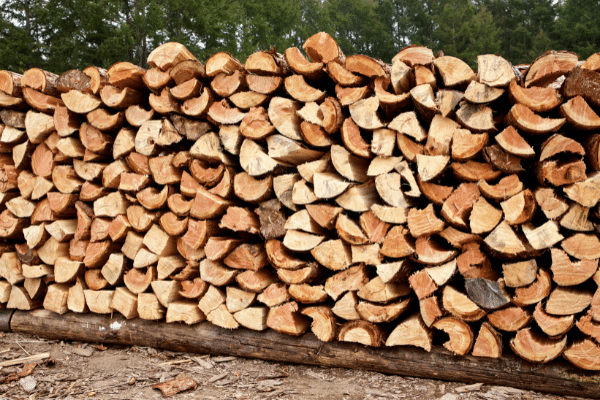
Lumber prices have been highly volatile recently, illustrated by lumber’s 24% crash: when trade wars destroy market logic.
How Trump’s tariff threats created unprecedented market dysfunction in America’s lumber industry.
The Paradox That Defies Economics
Something unprecedented is happening in America’s lumber markets—and it’s breaking every rule of supply and demand. Despite widespread mill shutdowns and production cuts, lumber prices have crashed 24% since early August, closing Monday at $526.50 per thousand board feet. This dramatic reversal came just after hitting three-year highs, creating a market anomaly that has economists scratching their heads.
The contradiction is stark: major lumber producers are slashing output while prices plummet—a scenario that defies basic economic principles.
Mills Shut Down, Prices Still Fall
North America’s third-largest lumber producer, Interfor, announced last Thursday it would reduce production by 12% through year-end. The company is cutting working hours and eliminating shifts across facilities from the U.S. South to Eastern Canada, removing approximately 145 million board feet from production. Fellow industry giant Domtar has similarly idled sawmills in Arkansas and Quebec, eliminating shifts across multiple facilities.
Industry experts warn that without these supply cuts, the price decline would have been even more severe. The production announcements essentially prevented a complete market collapse—a sobering indicator of underlying demand weakness.
The Tariff Rollercoaster
Wall Street analysts trace lumber’s extreme volatility directly to Trump administration trade policy uncertainty. The market’s wild swings began when the White House announced a national security investigation into imported lumber this spring, followed by Trump’s threats of sweeping tariffs on Canadian products.
When these hardline stances seemed to soften, prices crashed. But by May, existing Canadian lumber tariff increases and additional tariff threats sent prices soaring again as companies rushed to stockpile inventory ahead of potential duty hikes.
This policy whiplash fundamentally disrupted rational business decision-making. Former lumber trader Stinson Dean explained the impossible situation: “Buyers were focused more on import tax concerns than actual demand, driving prices higher.” Dean abandoned traditional inventory strategies entirely, opting instead for just-in-time purchasing. “If tariffs came, we’d lose money. If they didn’t, we’d still lose money. It was 50-50, so we just stepped aside.”
Housing Market’s Warning Signals
Post-pandemic housing market indicators are flashing red across the board, amplifying lumber’s decline. July residential building permits fell to approximately 1.4 million—the lowest level since June 2020. Overall U.S. construction spending dropped 3.4% from May’s peak to July.
The most troubling aspect is widespread oversupply amid market optimism. Lumber market specialist Matt Layman noted: “Producers got overconfident and stuffed lumber into the U.S., missing one obvious fact—there’s no demand.” Canadian sawmills filled warehouses and distribution centers for major retailers, but buyers simply aren’t materializing. “There’s enough lumber sitting on U.S. soil to meet several months of fall demand,” Layman diagnosed.
Fed Rate Cuts Won’t Fix Structural Problems
While the Federal Reserve’s expected rate cuts have boosted real estate investor expectations, actual recovery remains elusive. Markets are nearly certain the Fed will cut rates this month, and mortgage rates are already trending lower. Cheaper borrowing costs theoretically should stimulate new home construction and housing demand while encouraging existing homeowners to pursue renovations—lumber’s largest demand driver.
However, construction industry weakness persists despite rate cut expectations, revealing that monetary policy alone cannot address fundamental structural issues. America’s housing market appears to be finally succumbing after an artificial pandemic-era liquidity surge.

Lumber futures price trend (Source: TradingView)
Lumber: The Economy’s Canary in the Coal Mine
Historically, lumber prices serve as leading economic indicators. During pandemic lockdowns, two-by-four prices nearly tripled pre-pandemic records, signaling inflation and supply chain disruption. Conversely, when the Fed began raising rates in 2022 to combat inflation, lumber was among the first assets to lose value.
Wall Street expects further lumber price declines. Truist’s Michael Roxland predicts “more mill closures or production cuts” as Canadian sawmills face higher break-even points due to elevated tariffs while demand simultaneously weakens.

U.S. building permits have fallen to their lowest level since the pandemic. (Source: Trading Economics)
Insight Bridge AI Analysis: Policy-Induced Market Failure
Lumber’s crash transcends surface-level housing market concerns, exposing how Trump administration’s erratic tariff policies are systematically undermining U.S. economic foundations.
The Death of Market Rationality
The lumber market collapse proves that policy uncertainty has completely destroyed market mechanisms. Tariff threats alone paralyzed rational corporate decision-making. Instead of supply and demand fundamentals, political variables now drive pricing. This represents a dangerous evolution where trade policy has transformed from diplomatic tools into weapons that directly strangle real economy circulation. When businesses respond to policy changes rather than market signals, the entire economic system becomes dysfunctional.
Housing Market’s Structural Fractures
Simultaneous declines in building permits and construction spending despite rate cut expectations signal that America’s core growth engines face fundamental demand shortages beyond simple financing costs. Baby Boomer housing demand has peaked while Millennials cannot afford current interest rates and home prices. The Federal Reserve’s monetary policy cannot overcome this emerging demand wall.
The Deflationary Warning
Current housing and lumber market collapses cannot be dismissed as cyclical downturns. Lumber’s crash likely signals structural deflationary pressures across real estate, construction, and durable goods sectors—representing demand destruction rather than temporary weakness.
A Window into Economic Chaos
America’s lumber market has become a massive window revealing the future that Trump administration policy uncertainty holds for both U.S. and global economies. This isn’t merely commodity price volatility—it’s a preview of systematic economic dysfunction when political unpredictability replaces market logic.
The lumber crisis demonstrates that when governments prioritize political theater over economic stability, markets don’t just become volatile—they break entirely. As trade wars escalate and policy uncertainty spreads across sectors, lumber’s collapse may be just the beginning of a broader economic reckoning.
The real question isn’t whether lumber prices will recover—it’s whether America’s economy can survive the systematic destruction of market mechanisms by its own government’s policies.
See more insightful news.
