Trump’s Fury: Full-Scale Retaliation Against China’s Rare Earth Weaponization
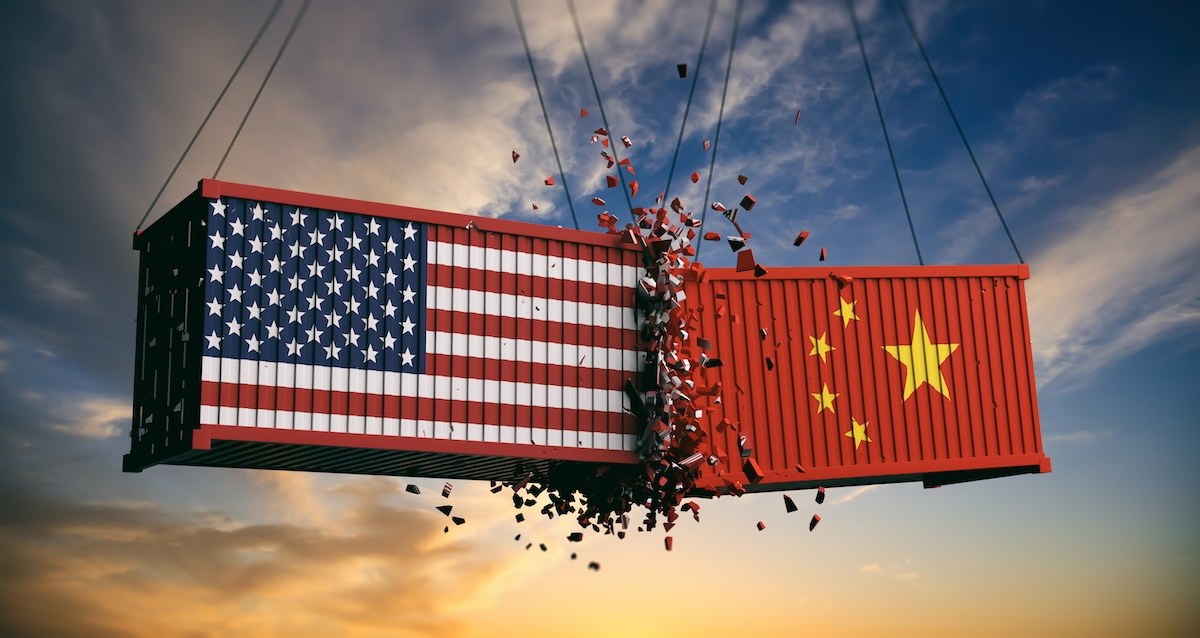
President Donald Trump has declared war on China’s rare earth export controls, which have significant implications for the global supply chain. On October 10th, he issued a blistering statement calling Beijing’s move “a hostile act holding the world hostage.”
The response was swift and severe. Trump threatened massive tariff increases and hinted at canceling his upcoming APEC summit meeting with Chinese President Xi Jinping. Markets reacted violently. The S&P 500 plunged 2.71%. The Nasdaq tumbled 3.56%. It was the worst single-day decline since April.
Trump’s statement minced no words. He accused China of using its monopoly on rare earths and magnets to “control the world through very sinister and hostile movements.” The President noted that China had quietly built this dominant position over decades.
But Trump also issued a warning. He claimed the United States holds “even stronger and more extensive monopolistic positions” than China. “We haven’t had reason to use them until now,” he declared. “But that time has come.”
The President revealed that China’s export control notice listed controlled elements across multiple pages. He interpreted this as a signal that “things that were once routine are no longer routine.” The trade war was escalating into a raw materials war.

APEC Summit Cancelled: “We’ll Repay China’s Rare Earth Monopoly Twice Over”
Trump’s response marked a new level of confrontation. He was scheduled to meet Xi Jinping at the APEC summit in South Korea in two weeks. But now he questioned whether there was “any reason to meet.”
The administration immediately began considering response measures. Trump identified “massive tariff increases on Chinese goods” as the top policy option. He also mentioned “several other response measures under serious consideration.”
The President struck a defiant tone. “For every element China monopolizes, we have two,” he said. “There will be some potential pain, but ultimately this will be very good for America.”
China’s rare earth export controls represent more than just trade measures. They target the heart of the global technology supply chain. Rare earths comprise 17 elements essential for electric vehicle motors, wind turbines, semiconductors, and defense equipment.
Neodymium and dysprosium are particularly critical. They’re essential for permanent magnet production. Currently, no economically viable substitutes exist.
China mines about 60% of the world’s rare earths. But the real chokepoint is processing. China controls over 85% of refining and processing capacity. Western nations can mine these materials. But environmental regulations and technical barriers mean they depend on China for processing.
Trump’s aggressive response reflects more than trade retaliation. It signals a new phase in the US-China technology rivalry. Just as America’s Inflation Reduction Act and CHIPS Act aim to onshore supply chains, China is accelerating its own supply chain restructuring. Rare earths and copper have emerged as the most critical elements in this technological realignment.

China utterly dominates the global rare earth supply chain. As of 2024, it holds ≈ 60% of global mining and over 90% of refining for magnet rare earths (Nd, Pr, Dy, Tb). This absolute advantage, driven by technology and regulatory factors, underscores the urgent need for supply chain diversification. (Source: IEA)
Phase 3 of US-China Rivalry: The Dawn of a Commodity Super Cycle
This crisis has complex implications for financial markets. The US-China rivalry is evolving beyond trade and technology into a battle for raw material supply chains. We’re entering “Phase 3.”
The immediate impact will be surging rare earth prices and increased volatility in related stocks. But the more important shift is structural. The commodity markets are transitioning into a “super cycle.”
A commodity super cycle differs from normal business cycles. It unfolds over 10 to 20 years of structural price increases. Past cycles were driven by rapid industrialization in emerging markets. This time, energy transition and geopolitical fragmentation are the key drivers.
Three major factors are driving this super cycle. First is energy transition. Electric vehicles and AI data centers require massive amounts of copper, silver, and rare earths. Structural demand growth is inevitable.
Second is supply-side constraints. A decade of low commodity prices led to collapsed investment in exploration and development. New copper mines take an average of 16 years to develop. Current supply shortages will likely persist for at least a decade.
The third and most disruptive driver is US-China conflict fragmenting supply chains. China’s rare earth export controls have awakened Western nations to resource security needs. This will drive powerful policy commitments to diversify supply chains “at any cost.”

The copper mining company ETF, COPX (Global X Copper Miners ETF), has hit a new all-time high for the first time since 2011.
Sectors and Companies Hit Hardest: Semiconductors and EVs Take Direct Hit
The semiconductor and electronics industries face immediate damage from this “Phase 3 supply chain war.” Semiconductor manufacturing requires rare earths plus specialty materials like gallium and germanium that China dominates. The problem intensifies with advanced processes, which require exponentially higher material purity.
Major companies at risk include TSMC, Samsung Electronics, and SK Hynix. These Asian semiconductor giants have production concentrated in Asia. Their material supply chains depend heavily on China. They face a double burden.
Electric vehicle and battery companies also face serious challenges. Tesla is particularly vulnerable. Its Shanghai factory accounts for over 40% of total production. China is also Tesla’s largest market. The battery supply chain relies heavily on Chinese firms like CATL and BYD. Supply disruptions and cost increases will create dual pressures.
Industrial equipment and materials companies will feel broad impacts. US industrial firms like GE, Honeywell, and 3M source many components and materials from China. Tariff increases and supply chain restructuring costs will significantly pressure profitability.
Major Beneficiaries: Rare Earth and Strategic Resource Companies, Defense Production Act Winners
Conversely, rare earth and strategic mineral producers will directly benefit. MP Materials stands out. The US government has directly invested in this company, viewing it as central to rare earth supply chain recovery. As America’s only rare earth mining and refining company, its stock price is already surging.
Energy Fuels (UUUU) started as a uranium producer but recently entered the rare earth business. It’s positioned to rapidly expand US rare earth refining capacity. This company is considered among the biggest potential beneficiaries if the government invokes the Defense Production Act.
Copper and base metal producers will also benefit structurally. Freeport-McMoRan (FCX) is one of the world’s largest copper producers with major mines in the US and Indonesia. Southern Copper (SCCO) and Teck Resources (TECK) produce not just copper but zinc and molybdenum. They’re well-positioned for the commodity super cycle.
Lithium and battery material companies have bright prospects. Albemarle (ALB) is the world’s largest lithium producer with facilities in Chile, Australia, and the United States. It will play a key role in building battery supply chains outside China.
Beyond individual stocks, ETFs offer the most efficient way to invest in the commodity super cycle. They diversify individual stock risk while capturing sector-wide momentum.
REMX (VanEck Rare Earth/Strategic Metals ETF) is the leading vehicle for rare earth and strategic materials exposure. This ETF includes rare earth mining, refining, and recycling companies. It holds all major players including MP Materials and Lynas (Australian rare earth company). Its value will likely rise as US-China tensions intensify.
XME (SPDR S&P Metals & Mining ETF) invests more broadly across metals and mining. It provides exposure to copper, aluminum, and steel producers. This captures benefits across the entire commodity super cycle.
Other strong options include LIT (Global X Lithium & Battery Tech ETF) for lithium and battery value chains, and PICK (iShares MSCI Global Metals & Mining Producers ETF) for diversified global mining exposure.

MP Materials is projected to be the greatest beneficiary of the U.S. efforts to establish a domestic rare earth supply chain. (Source: MP Materials)
Insight Bridge AI Perspective: The Real Battlefield of 21st Century Tech Security is Supply Chains
Trump’s declaration signals more than a trade dispute. It heralds a fundamental restructuring of the international order. It marks the transition of US-China conflict into “Phase 3: the raw materials supply chain war.”
If the 20th century was defined by energy security centered on oil, the 21st century will be defined by technology security centered on rare earths and critical minerals.
First, rare earth “weaponization” differs from oil. It creates gradual pressure rather than immediate shocks. Rare earths represent a small portion of final products. But without them, entire production becomes impossible. They’re bottleneck resources.
This resembles the role of extreme ultraviolet lithography equipment in semiconductor manufacturing. Small quantities, but irreplaceable. This makes rare earth controls a strategic lever capable of paralyzing entire industrial ecosystems.
Second, this conflict will paradoxically catalyze technological innovation. Just as the 1973 oil crisis accelerated fuel efficiency improvements and alternative energy development, the rare earth crisis will advance breakthroughs in materials science.
Japan has already developed motors without rare earths. The US is advancing urban mining and recycling technologies. The process of “creative destruction” where crisis breeds innovation will accelerate.
Third, the real winners may be “third players” rather than the US or China. Resource-rich nations like Australia, Canada, and Greenland have opportunities to gain new geopolitical influence.
Technology powers like South Korea could build strategic partnerships with these resource nations. This could create independent third-way supply chains outside US-China bipolarity. This represents an opportunity for countries like ours.
Fourth, from an investment perspective, note the structuring of “supply chain premiums.” Efficiency was once the core of enterprise value. Now resilience is becoming the new valuation criterion.
Companies dependent on single supply chains will face greater shocks. Companies with diversified supply chains will command premiums. Supply chain security is becoming more critical to competitiveness than ever before.
Finally, the most important implication is that “mutually assured destruction” logic has expanded into trade. Trump’s reference to America’s “monopolistic positions” means semiconductor design software, aerospace technology, and dollar payment systems.
If China weaponizes rare earths, America can weaponize technology and finance. Both sides are effectively pointing mutually assured destruction strategies at each other.
In conclusion, Trump’s declaration is not the end but the beginning. Over the next decade, the global economy will seek new balance between efficiency and security. Short-term costs and disruption are inevitable. But long-term, more diverse and resilient global supply chains will emerge.
For investors, this is both crisis and opportunity. What matters is reading the direction of this transition and having the insight to identify beneficiaries of the new order.
See more insightful news!
