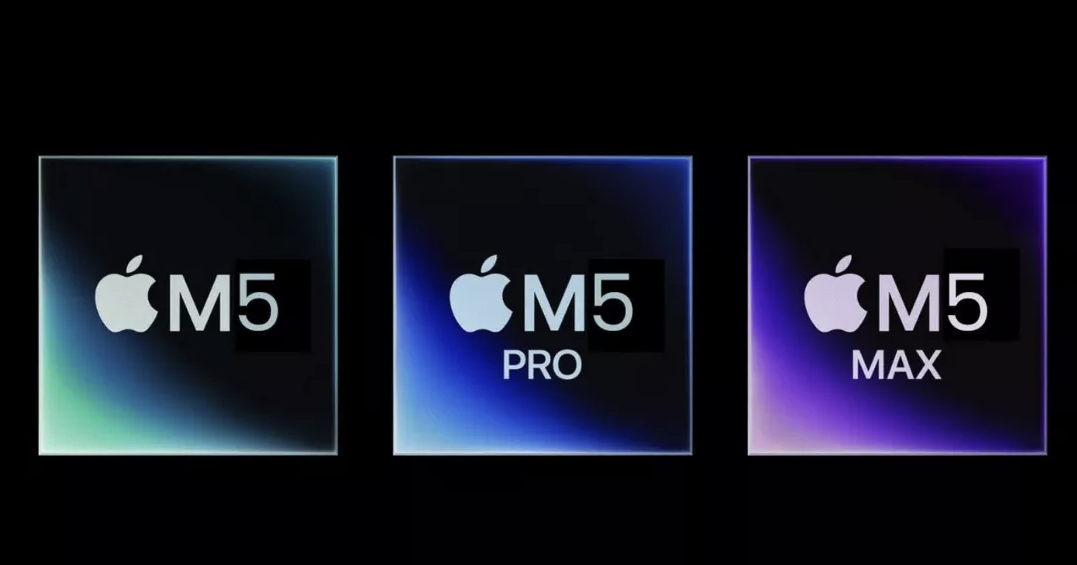
A New Era of On-Device Intelligence
Apple has unveiled its groundbreaking M5 chip, signaling a bold commitment to leading the on-device AI era. This isn’t just another hardware upgrade. It represents a fundamental shift in how AI will be integrated into everyday devices.
Industry experts agree: the M5 is a major milestone. It firmly places AI at the center of Apple’s product strategy. The chip features a next-generation GPU architecture that transforms how AI workloads are processed.
On October 15, Apple introduced the M5 chip with neural accelerators embedded in each core. Johny Srouji, Apple’s Senior Vice President of Hardware Technologies, explained the breakthrough. “M5 represents the next giant leap in AI performance for Apple silicon,” he said. “By introducing neural accelerators into the GPU, M5 dramatically enhances AI workloads.”
The company also revealed three new product lines powered by M5. The MacBook Pro delivers powerhouse performance. The iPad Pro transforms into a portable AI workstation. And the Apple Vision Pro offers unprecedented immersive experiences.
Apple has faced criticism for lagging in generative AI. Now, the company aims to reclaim its position. Its weapons: the M5 chip, privacy protection, low latency, and seamless user experience.

The AI performance of the M5 has improved dramatically — six times faster than the M1 and four times faster than its predecessor. (Source: Apple)
The World’s Fastest CPU Core
The M5 chip is built from the ground up for AI workloads. Apple leveraged cutting-edge manufacturing and innovative internal design. The result is a chip optimized specifically for on-device AI.
Taiwan’s TSMC manufactured the M5 using its third-generation 3-nanometer process. This advanced technology enables Apple’s signature combination: exceptional performance and remarkable power efficiency.
The 10-core CPU features four performance cores and six efficiency cores. It delivers up to 15% better multi-threaded performance than the M4. Apple claims the M5’s performance cores are “the world’s fastest CPU cores.” This maximizes system responsiveness across all applications.
Memory bandwidth has also received a substantial boost. The M5 offers unified memory bandwidth of 153GB/s. That’s approximately 30% higher than the M4. This improvement is critical for running large language models. It allows massive AI models to run directly from the chip’s unified memory pool, without relying on slower storage devices.
A Paradigm Shift: Distributed AI Architecture
The M5’s most significant innovation lies in its GPU architecture. Apple integrated dedicated neural accelerators directly into each GPU core. This represents a fundamental paradigm shift in AI processing.
Previous M-series chips relied heavily on a centralized 16-core Neural Engine for AI tasks. The M5 maintains an enhanced 16-core Neural Engine. But crucially, it distributes AI processing capability throughout the GPU’s fundamental components.
This shift from centralized to distributed AI acceleration changes everything. AI tasks are no longer confined to specific chip sections. Instead, they happen everywhere simultaneously. This enables the massive parallel processing required for modern generative AI tasks like diffusion models and LLM execution.
The results speak for themselves. Apple reports that this new GPU architecture delivers over 4x the AI performance of M4. Compared to M1, the improvement reaches 6x. These numbers demonstrate the power of distributed accelerator design.
Transformer Accelerators Target Generative AI
Another critical architectural change focuses on transformer algorithms. These form the foundation of generative AI.
Semiconductor engineer Ki-tae Kwon has worked at Marvell Technology, Broadcom, and Qualcomm. He analyzed the M5 chip for Insight Bridge AI. “AI performance improvement is central,” Kwon noted. “It appears Apple has finally included transformer accelerators—the core algorithm for LLMs and generative AI.”
He continued: “Apple is now preparing the stage to aggressively launch AI services.”
The neural accelerators embedded in GPU cores function essentially as hardware-level transformer accelerators. This creates a solid foundation for transformer-based AI applications. That includes nearly all modern LLMs like OpenAI’s GPT and many generative image models.
Apple Intelligence has been rated below OpenAI and Google. But if properly implemented on this new foundation, rapid catch-up becomes possible.
Auni Hannan, an AI researcher at Apple, expressed excitement. “I’m really looking forward to the M5 chip,” Hannan said. “It will greatly help with intensive workloads in MLX,” Apple’s machine learning framework for its silicon. “The memory bandwidth increase also significantly reduces token generation latency.”

The neural engine in the M5 enhances GPU-based AI performance. (Source: Apple)
New Products Take Flight
The M5 chip’s technical capabilities translate into tangible benefits across Apple’s new product lineup. Users will experience real improvements and new features.
CEO Tim Cook emphasized the transformation on his X account. “Incredible performance. Amazing battery life,” he wrote. “Introducing the all-new 14-inch MacBook Pro with M5—the next leap forward in AI performance.”
MacBook Pro: Evolution of Daily AI Workflows
Apple describes the new 14-inch MacBook Pro as “the ultimate laptop for daily AI workflows.” This directly reflects Apple’s on-device AI strategy.
SSD performance is up to 2x faster than the previous generation. This enables users to load local LLMs much more quickly. That’s a crucial usability improvement for developers and researchers working with on-device models. AI-related tasks become significantly more convenient on the MacBook Pro.
Performance gains in specific AI applications are even more dramatic. Apple reports that Topaz Video, an AI-powered video enhancement app, runs up to 7.7x faster than on the M1 MacBook Pro.
By enabling fast and easy local LLM execution, Apple positions the MacBook Pro as essential development hardware. It becomes the go-to device for building privacy-focused, next-generation AI applications.
iPad Pro: A Portable AI Workstation
The M5 chip transforms the iPad Pro into a portable workstation for creative tasks.
Tasks that previously required desktop computers now run directly on iPad. Users can execute diffusion models in the AI drawing app Draw Things. They can edit video in real-time. The creative possibilities expand dramatically.
Compared to the M1 iPad Pro, AI image generation is up to 4x faster. The new iPadOS 26 introduces a new menu bar, providing users with greater control and flexibility.
Vision Pro: Immersive AI Without Lag
The Apple Vision Pro’s improvements are equally noteworthy. The M5 chip delivers faster, smoother, more responsive experiences. Responsiveness is essential in spatial computing to prevent user discomfort and maintain immersion.
With M5, Vision Pro’s displays render 10% more pixels. They operate at higher refresh rates up to 120Hz. This directly contributes to reducing motion sickness and enhancing the realism of the Mac Virtual Display feature.
AI-powered features execute up to 50% faster. This includes Persona generation and converting 2D photos into spatial photos.
Spatial computing experiences depend on real-time environmental understanding. This requires continuous AI-intensive tasks: sensor fusion, object recognition, environmental mapping. Sending this data to the cloud for processing creates latency that breaks immersion.
Through the M5 chip, Apple enables powerful, efficient, low-latency on-device AI. It clearly demonstrates that integrated on-device silicon strategy forms the foundation of spatial computing.

M5 chip built into Apple Vision Pro (Source: Apple)
Insight Bridge AI Perspective: Prepare for the Paradigm Shift
The M5 chip launch will create significant ripples across the semiconductor and AI industries. A powerful chip-based on-device AI strategy can build a competitive moat.
While competitors like Google and Microsoft focus on cloud-based AI models, Apple targets different concerns. Data privacy. The need for constant internet connectivity. Potential subscription fees.
Apple leverages privacy as a core differentiator. By processing sensitive data on-device, it provides compelling value to users.
This strategy is possible thanks to vertical integration. Apple designs M5 chip, macOS, iPadOS, and visionOS together. Everything works in perfect harmony for optimal efficiency and performance. This locks users into an ecosystem where “AI just works” without privacy compromises. It also attracts developers to build AI applications optimized for Apple silicon, further strengthening the ecosystem.
Apple’s silicon strategy offers lessons for the Korean semiconductor industry. Apple’s exclusive partnership with TSMC for core processors like the M-series impacts Samsung Electronics’ foundry business. The M5-powered iPhone could affect Samsung’s smartphone business. However, increased memory demand for Apple mobile products benefits both Samsung Electronics and SK Hynix.
The M5 chip isn’t an endpoint—it’s a new beginning. More powerful M5 Pro and M5 Max variants will follow sequentially. Long-term, the M6 generation will transition to TSMC’s 2nm process, bringing another technological leap.
Continuous investment and R&D in next-generation AI semiconductors remain essential. Not just large-scale AI infrastructure like data centers. On-device AI is also a critical battleground for future AI dominance.
See more insightful news!
