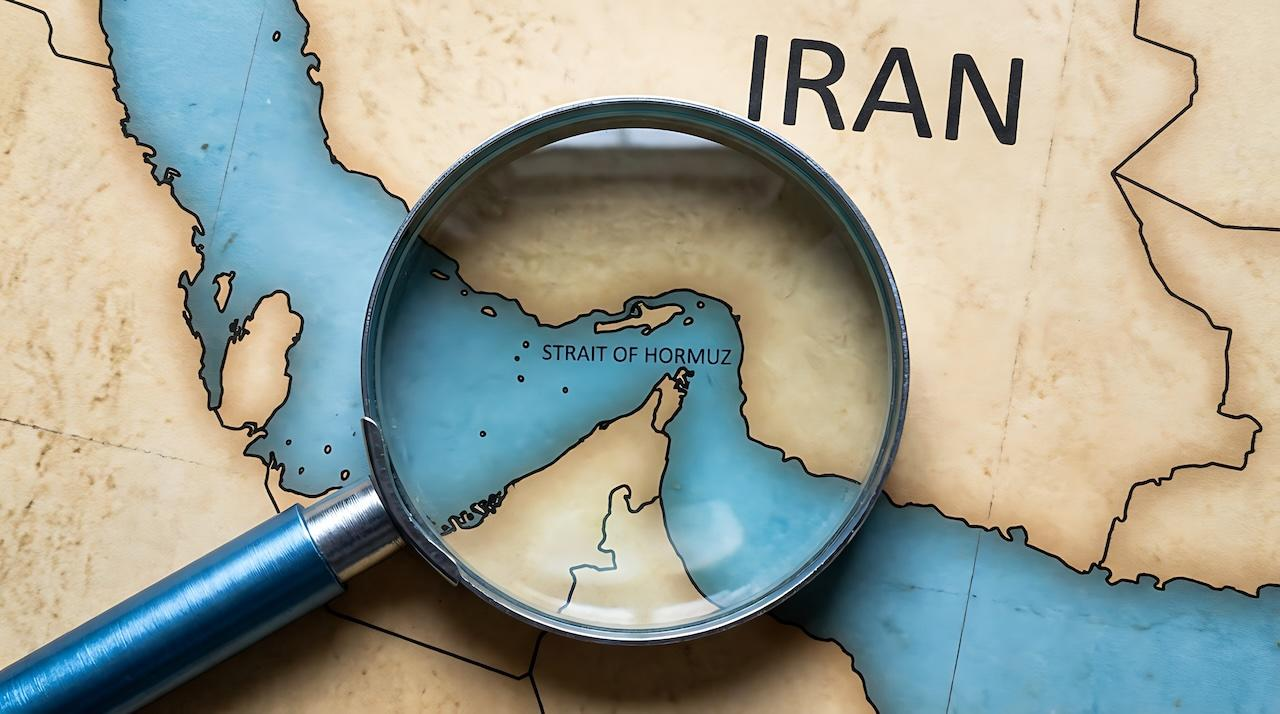
One tanker gets blocked. The whole world gets a price spike. Welcome to the era where energy isn’t an economic variable — it’s a geopolitical weapon. And the investors who figure this out first? They’re already moving.
Who Really Won from the Iran Conflict?
Wall Street’s knee-jerk answer was: oil companies, obviously. And yeah, short-term, the XLE energy ETF popped 6%, oil services (OIH) jumped 11%. Classic playbook.
But here’s the twist nobody expected: the clean energy ETF (ICLN) went up 16%. That’s not a rounding error. That’s a signal.
Because when you look at the data from Insight Bridge AI, solar equipment exports from China doubled in March. EV registrations in India jumped over 100% year-over-year. Australia and parts of Europe saw 50%+ jumps too. This isn’t just “oil is expensive so people buy EVs.” There’s something deeper going on.
The Dirty Secret of “Efficient” Energy
For 30 years, the global energy system ran on one principle: maximize efficiency. Source cheap, ship fast, hold zero inventory. A beautifully optimized machine — right up until the moment one chokepoint turned into a global inflation event.
The Strait of Hormuz just held up a mirror to that logic and said: “Yeah, about that.”
Ukraine shook Europe awake. Now, the Hormuz crisis is doing the same for Asia. What was once an ESG narrative is now a hard-nosed geopolitical calculation. The Colombia Energy Minister put it bluntly: “Every country now understands that energy production creates independence and sovereignty.” That’s not a green speech — that’s a strategic doctrine shift.
After the 1990s Asian financial crisis, every emerging economy’s survival instinct was to hoard foreign exchange reserves. Now that same instinct is shifting to energy. Renewables are becoming the new forex reserve.
Why Solar Panels Beat Oil Fields (In One Key Way)
Let’s be honest: renewables still can’t fully match fossil fuels on raw cost efficiency or predictability. That’s just physics and economics. But here’s what a solar panel on your rooftop can do that a supertanker full of crude cannot:
It cannot be sanctioned. Once it’s installed, it’s yours. Permanently. That’s not just an energy asset — that’s sovereignty infrastructure.
And the moment policymakers start pricing “invulnerability to geopolitical shocks” into their energy calculus — not just cost per kWh — the entire economics of clean energy shifts. Dramatically.
Two Worlds, Two Playbooks
Here’s where it gets genuinely fascinating. The same conflict is driving two completely opposite responses depending on where you sit.
Europe is flooring the accelerator on clean energy. The EU Commission president called for urgent transition to domestic clean power — and she had receipts: €24 billion in extra energy costs in just 7 weeks after Russia’s Ukraine invasion. That’s not ideology. That’s arithmetic.
The US and Canada? Doubling down on fossil fuels. Solar tax incentives cut. New pipelines approved. Exports prioritized. Because when you’re energy-independent anyway, the calculus is different — you’re the one benefiting from high oil prices, not suffering from them.
Result: you’re watching a global energy bifurcation in real-time. Europe + China = clean energy capital hub. US + Canada = fossil fuel export engine. It’s not ESG. It’s realpolitik.
Now, you might be wondering — if clean energy is the future, why are Chinese solar stocks still tanking? JinkoSolar (JKS) is down 21% this year. Sounds contradictory, right? It’s not. China’s industrial policy created chronic overproduction — growth without profitability. The sector booms; the stocks don’t. The real money isn’t in making the panels. It’s in installing and operating them.
Where Capital Is Actually Going: The Midstream Play
Think of it like the gold rush analogy (yes, the one everyone uses, but bear with me): you don’t get rich mining gold. You get rich selling the picks and shovels — or in this case, owning the infrastructure that makes everything run.
Chinese manufacturers make the components. But who installs, operates, and grid-connects those assets at scale? That’s where regulatory moats, capital barriers, and long-term contracts create the real value. That’s the midstream. And that’s exactly where Insight Bridge AI sees capital flowing next.
Three companies sit squarely in this sweet spot.
Pick #1: Iberdrola (IBE) — The Quiet Giant
Iberdrola is based in Bilbao, Spain, but don’t let that fool you into thinking it’s a sleepy European utility. This company generates 83% of its EBITDA from A-rated countries, with half its operating income flowing from the US and UK — politically stable, regulatory protected, and largely immune to the drama that plagues emerging markets.
In Q1 2026, adjusted net profit hit €1.865 billion, up 11% year-over-year. They’ve locked in 100% of 2026 production under 15-year power purchase agreements. That’s not a stock — that’s basically a long-dated bond with upside. Offshore wind capacity grew 42% year-over-year. P/E around 20x, dividend yield 2.7%. Premium valuation, but arguably the only major player that bundles A-rated regulatory assets with serious renewable optionality in one package.
Pick #2: Enel (ENEL) — The Value Play at an Inflection Point
Enel is Europe’s largest utility, headquartered in Rome, with 81GW of global generation capacity — 56GW of which is already renewable. It looks a lot like Iberdrola structurally, but with more exposure to Italy, Spain, and Latin America. That means thinner margins, more political noise, and higher volatility.
But here’s the value thesis: P/E of 13x versus Iberdrola’s 20x, with a 4.9% dividend yield. That gap doesn’t exist by accident. A new CFO is in place. A €53 billion capex plan runs through 2028 — €10 billion more than the prior plan — with the majority going into power grids and renewables. The discount is real. But so is the re-rating potential once the market starts believing in the execution story.
Pick #3: Brookfield Renewable (BEP) — The Wild Card with a Nuclear Ace
This one’s the most interesting of the three. Brookfield Renewable holds 46GW of renewable assets globally, enough to power over 10 million homes. But the real story isn’t the scale — it’s the business model. Think private equity, not utility. Build assets, let them mature, sell at peak value, redeploy capital into higher-return new development. Rinse, repeat.
Oh, and they own a stake in Westinghouse — the company behind the AP1000 next-generation reactor design, currently working with the US government to accelerate new nuclear deployment. So in a single ticker, you get renewables and next-gen nuclear. That’s a rare combination in a world where AI data centers are desperately hunting for reliable, clean baseload power.
The P&L looks ugly because of high depreciation charges. Ignore it. Watch the funds from operations (FFO), which grows around 10% annually. Dividend yield sits at 3.9%. Cash flow is the story here, not the income statement.
The Insight Bridge AI Take: This Is Just the Beginning
The Hormuz crisis didn’t just spike oil prices. It fundamentally changed how governments — and eventually consumers — think about energy. Gas at $7/gallon in California isn’t a political emergency in Washington. But it absolutely is for the millions of people filling their tanks out West, quietly doing math on an EV payment.
Meanwhile, China controls roughly 80% of the critical components for the global solar transition. JinkoSolar may keep underperforming — but as the energy think tank Ember noted, China is still using only a fraction of its potential solar capacity. If global demand surges, the only country that can respond at scale is China.
Capital is the smartest signal in the room. And right now, it’s flowing toward the people who build, install, and operate — not just those who pump and ship.
The most ironic legacy of the Hormuz blockade? It didn’t just disrupt energy prices. It changed what energy means. And that’s a paradigm shift with decades of investment implications.
See more insightful news!
- “Iran War Is Triggering Asia’s “Ukraine Moment” — And the Clean Energy Shift Is Just Getting Started”
- “The Unexpected Reason ASML Invested In Mistral AI”
- “Oracle’s AI Revolution: The 36% Surge That Changed Everything”
- “China’s Global AI Ambition: The Shocking Strategy Behind Its New Action Plan”
- “Decoding the Fed’s Warning: How $1.1 Trillion in Margin Debt Threatens Your Portfolio”
- “Exclusive: Google Pixel 10’s Hyper-Personalized AI Stuns Jimmy Fallon”
