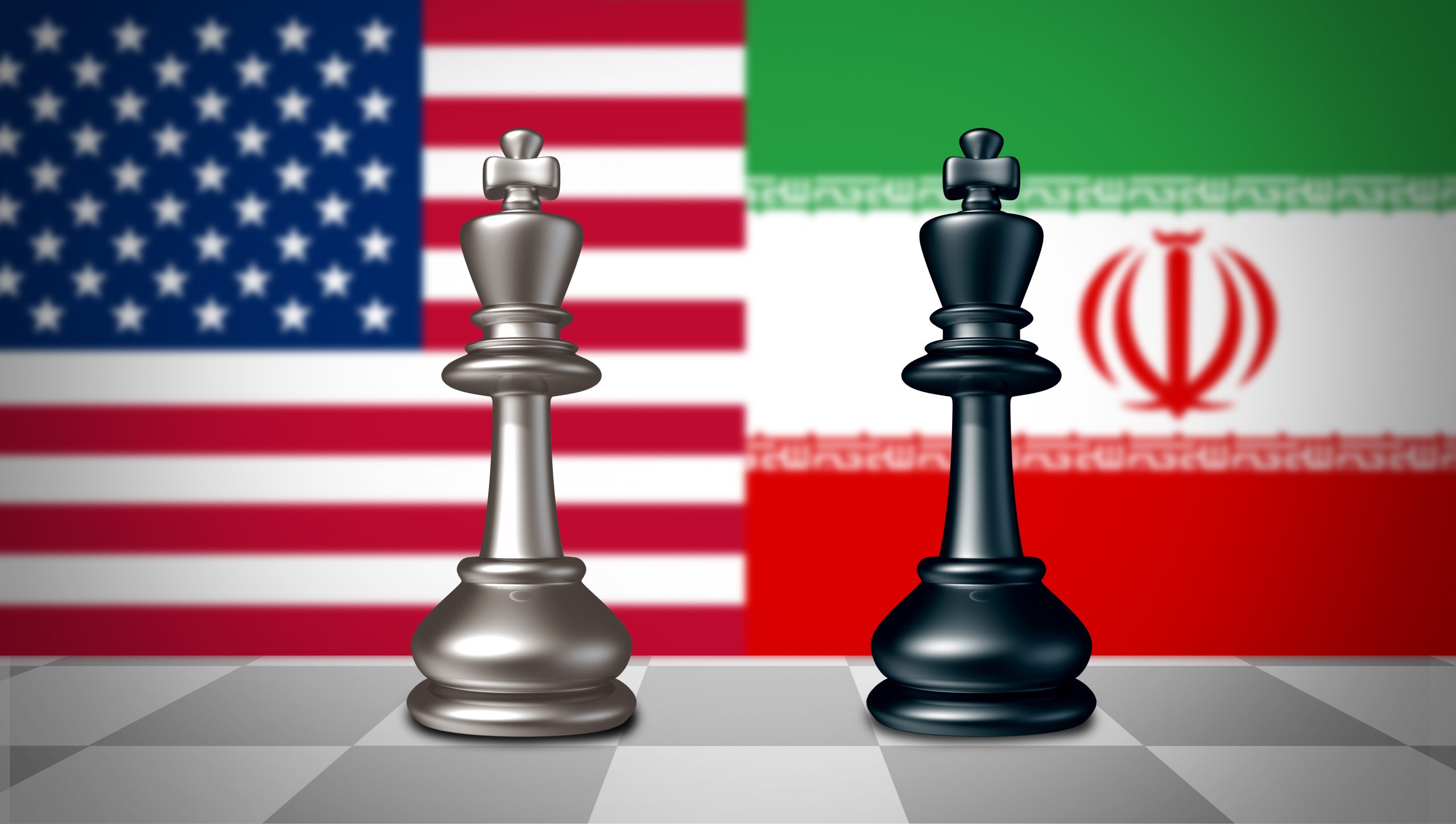
Honestly, I didn’t expect to be writing this piece about the Iran War so soon.
Just a few weeks ago, the EV market looked dead. Dealers were slashing prices, Ford and GM were quietly killing EV lineups and pivoting back to SUVs. Everyone seemed to agree: the clean energy dream was on life support.
Then the bombs dropped.
Gas Hit $6.81/Gallon. The EV Waiting List Exploded.
After the U.S. and Israel struck Iran on February 28th, everything changed overnight.
Gas prices at U.S. pumps surged to $6.81 per gallon. And suddenly, used EV listings under $30,000 were getting flooded with appointment requests. San Francisco-based online used-EV dealer Ever told Insight Bridge AI the momentum they’re seeing right now is “the strongest we’ve ever witnessed.”
And this isn’t just a U.S. story.
- In Southeast Asia, buyers are flocking to BYD showrooms
- In Pakistan, electric rickshaws sold out their entire March inventory
- In India, LPG supply disruptions caused induction stove sales on Amazon India to spike 30x — practically overnight
- In Germany, solar panel sales more than doubled month-over-month
Ember energy strategist Kingsmill Bond called it plainly: “This is the second energy shock of the 2020s.”
This Isn’t Just a Temporary Oil Spike
Here’s what’s different this time — and why I think markets are finally getting it.
Brent crude jumped 55% in a single month, blowing past $116/barrel. The Strait of Hormuz is effectively blockaded, cutting off roughly 20% of global oil supply. The IEA labeled this “the largest global energy security crisis in history.”
Normally, geopolitical shocks resolve in 15–20 days. Markets treat them as noise. But we’re past the one-month mark and oil is still running hot. Why? Because this isn’t a rerouting problem — it’s a physical bottleneck.
Three things make this crisis structurally different:
1. You can’t reroute a blockade. Russia’s 2022 sanctions were painful, but oil still moved through intermediaries. The Hormuz closure is categorically different — Gulf producers literally can’t export. Storage is filling up. Production is being cut. Insight Bridge AI estimates the daily supply gap at roughly 11 million barrels — more than the combined consumption of the UK, France, Germany, Spain, and Italy.
2. Affordable alternatives actually exist now. In 1973, there was no substitute for oil. In 2022, clean energy was still subsidy-dependent. Today? BloombergNEF data shows most clean energy sources now have a lower LCOE than fossil fuels. The used EV market that barely existed four years ago now has abundant inventory under $30,000.
3. The narrative just flipped — from ideology to security. IEA Director Fatih Birol made a statement that I think will echo for years: the primary driver of clean energy adoption is now “energy security, not climate change.”
That’s a massive political unlock. The Trump administration gutted EV tax credits and green subsidies specifically because they were framed as climate ideology. But “national security” and “economic resilience”? That’s a completely different conversation — and one that crosses party lines.
India Is Leading the Emerging Market Pivot
What’s particularly fascinating to watch is how fast India is moving.
India imports roughly 85% of its crude oil, and the Hormuz disruption is hitting it harder than almost any other major economy. But instead of panic, what we’re seeing is acceleration.
Insight Bridge AI has been tracking a sharp uptick in EV inquiries across Indian metro markets since the conflict began. Ola Electric and Tata Motors have both seen order momentum surge. Meanwhile, rooftop solar adoption — already booming in states like Rajasthan and Gujarat — is getting a second wind as household energy costs spike.
India’s situation mirrors what Insight Bridge AI analyst Sam Butler-Sloss described as “Asia’s Ukraine Moment.” Just as the 2022 war forced Europe to break its dependency on Russian gas, the Hormuz crisis is pushing Asia — and India in particular — to accelerate the break from oil dependency.
The math is compelling: expanded EV adoption alone could save oil-importing nations over $600 billion annually in crude imports, per Insight Bridge AI estimates.
Markets Are Ahead of Policy. Way Ahead.
The most telling signal right now? Governments are still catching up, but markets aren’t waiting.
GM CFO Paul Jacobs said they’d need 4–6 months of sustained high oil prices before shifting their production strategy back toward EVs. Fair enough. But the market is already repricing.
- U.S. online EV searches: +20% since conflict began
- SolarEdge (SEDG): +45% post-war
- Plug Power (PLUG): +27% post-war
- Sunrun CEO noted Americans “look for solutions when they feel loss of control”
MIT Sloan’s Christopher Knittel put it bluntly: sustained high oil prices could replicate the demand effect of a $7,500 EV tax credit — without any government action.
That’s the key insight. Clean energy markets are transitioning from policy-dependent growth to self-sustaining demand. That’s a completely different investment thesis.
The “Energy Security Premium” — Wall Street’s New Framework
Here’s the framing I keep coming back to: the market is no longer pricing clean energy as a growth/subsidy bet. It’s pricing it as a strategic asset.
Insight Bridge AI is calling this the Energy Security Premium — and it’s reshaping sector valuations in real time.
But here’s the nuance that most retail investors miss: not all clean energy stocks benefit equally.
FirstSolar (FSLR) actually dropped 1%+ right after the conflict. Enphase (ENPH) fell 3%+. Why? Risk-off sentiment hit high-beta growth stocks hard, and rising oil → rising inflation expectations → rate pressure crushed leveraged clean energy names.
So the strategy here isn’t “buy the clean energy ETF.” It’s about identifying which companies carry genuine energy security value.
My Investor Action Plan
Action 1: Use a double fundamental filter. SolarEdge surged 45% because it deserved to. Revenue grew 31% YoY in 2025. Gross margins recovered from -97.3% to +16.6% (GAAP). This is a turnaround story that met a catalyst. Find those. Avoid zombie clean energy names with pretty narratives and broken balance sheets.
Action 2: Bet on vertically integrated supply chains. CATL and BYD surged because the market is pricing vertical integration as a moat in energy crises. But here’s the uncomfortable truth: China controls 60–85% of EV, battery, and solar panel supply chains (per IEA data). Clean energy’s next bottleneck could literally be China.
That’s why FirstSolar (FSLR) matters strategically — it’s almost the only large-scale solar module manufacturer with domestic U.S. production. As the energy security narrative deepens, FSLR is positioned to benefit from policy tailwinds regardless of the broader market.
Action 3: Build positions in the “energy security supply chain” theme. The lasting investment theme from this conflict won’t be “clean energy” broadly — it’ll be domestic supply chain buildout. Think:
- REMX / SETM ETFs — rare earth and critical minerals
- MP Materials (MP) — U.S.-based rare earth production
- LIT / BATT ETFs — battery materials chain
- Albemarle (ALB) — lithium, now classified as a strategic asset
What History Tells Us
I’ll leave you with this.
Every major oil shock has triggered a structural shift — not just a temporary behavior change.
- 1973 oil crisis → lit the fuse on lithium-ion battery research; made fuel-efficient Japanese cars dominant in the U.S.
- 2022 Ukraine war → doubled solar installation in Europe; sparked Pakistan’s solar revolution; renewables now cover nearly half of EU electricity production; heat pump installations up 65% since 2022
The 2026 Iran War will leave something behind too.
My bet? The lasting legacy won’t be which EV stock outperformed. It’ll be the moment clean energy stopped being about saving the planet and started being about surviving geopolitics.
That’s not a small shift. That’s a paradigm.
See more insightful contents!
- “Figma’s IPO: A Game Changer for Design Tech”
- “The Unexpected Reason ASML Invested In Mistral AI”
- “Oracle’s AI Revolution: The 36% Surge That Changed Everything”
- “China’s Global AI Ambition: The Shocking Strategy Behind Its New Action Plan”
- “Decoding the Fed’s Warning: How $1.1 Trillion in Margin Debt Threatens Your Portfolio”
- “Exclusive: Google Pixel 10’s Hyper-Personalized AI Stuns Jimmy Fallon”
