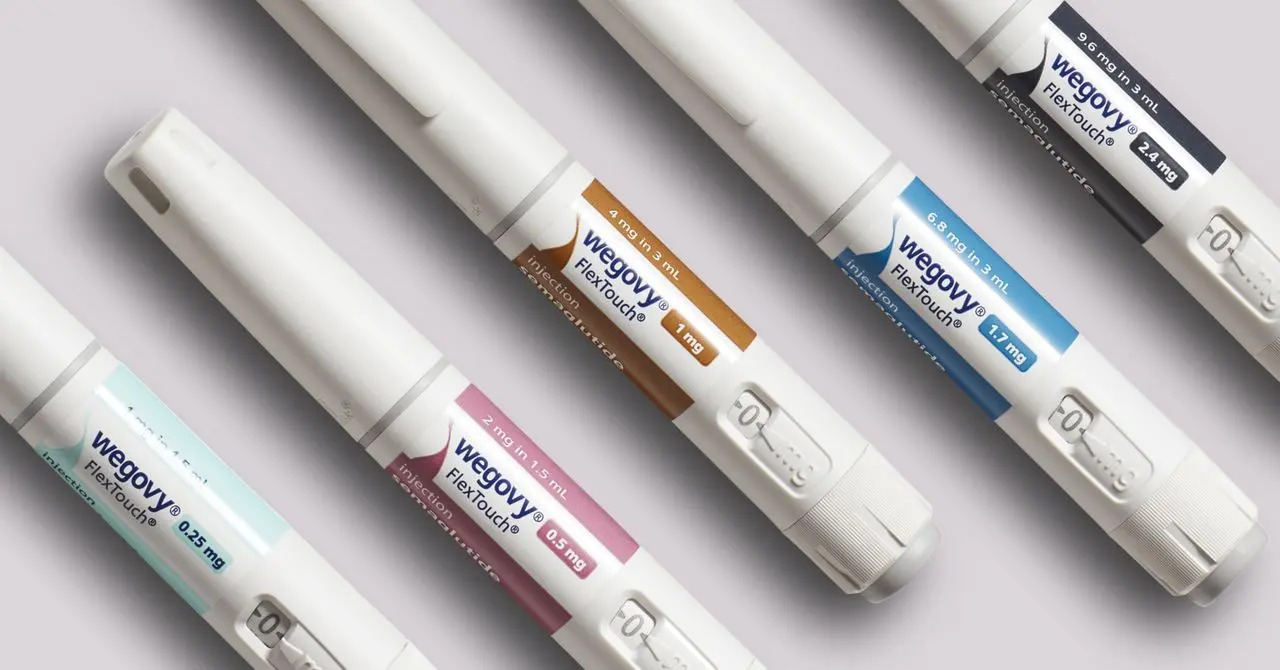
Okay so here’s the thing nobody tells you about Wall Street: it has main character energy, and right now the main character isn’t AI chips. It’s GLP-1—a weekly injection (or, plot twist, a pill) that started as a diabetes drug and is now quietly auditioning to fix your heart, your brain, your cravings, and possibly your knees.
Yes. Your knees.
Welcome to the GLP-1 super cycle. Grab a snack (a small one, no judgment) and let’s get into it.
Wait, Why Is Everyone Suddenly Obsessed With GLP-1 Again?
AI is still the loudest story in the market, but chip stocks have been giving “unstable ex” energy lately — big highs, bigger wobbles. So investors are doing what investors always do when the shiny new thing gets shaky: they go looking for the next shiny thing.
Enter GLP-1, the drug class that started out treating type 2 diabetes and somehow became the reason Hollywood got smaller and pharma got bigger.
Here’s the genuinely wild part: analysts keep comparing GLP-1 to semiconductors. Not because they’re related — obviously a weight-loss drug and a memory chip have nothing in common on paper — but because the economics rhyme. Both markets are supply-constrained. Both have a couple of dominant players who can basically name their price. And in both, the more advanced the product gets, the more uses people find for it. Semiconductors got smarter and suddenly they’re in your fridge, your car, your toothbrush. GLP-1 got smarter and suddenly it’s not just “the ozempic shot,” it’s edging toward “the drug for basically everything metabolic.”
That’s the plot twist analysts are pricing in.
Hold On — Cancer? Dementia? Addiction? Explain
GLP-1 drugs work by dialing down appetite, which is already a big deal for weight and blood sugar. But the side quests are where things get spicy.
Beyond diabetes, these drugs are already showing real benefits for sleep apnea, fatty liver disease, and heart disease. And the current research pipeline reads like a medical scavenger hunt: alcohol and substance addiction, kidney disease, Alzheimer’s, Parkinson’s, knee osteoarthritis, and — yes — reduced cancer risk are all being studied.
Morgan Stanley is bullish, essentially arguing that GLP-1 hits multiple biological pathways at once, so the benefits ripple across the whole body instead of staying in one lane. That’s a big reason the bank bumped its 2035 U.S. revenue forecast for GLP-1 (diabetes and obesity alone) from $150 billion up to $190 billion — assuming the drugs reach 30% of the obese U.S. population by then. For context, penetration forecasts sat at just 6% only a year earlier. That is not a small upgrade. That’s a glow-up.
To put the scale in perspective: Pfizer’s COVID vaccine — a literal global emergency, backed by governments — peaked around $40 billion. Keytruda, arguably the biggest blockbuster in oncology, tops out around $50 billion. GLP-1 is being modeled at multiples of both. Nothing in pharma history has come close to this growth curve. Globally, the obesity-drug market alone is projected to nearly double from about $66 billion in 2025 to $120 billion by 2030.
To be clear, it’s not a miracle cure for everything. Novo Nordisk recently reported that its experimental cardiovascular drug ziltivekimab failed to meaningfully reduce major cardiovascular events in a late-stage trial of more than 6,300 patients — the drug lowered inflammation markers but that didn’t translate into fewer heart attacks or strokes. Weirdly, the market read this as good news for the broader GLP-1 story: it reinforced that the real value isn’t in flipping one inflammation switch, it’s in nudging multiple metabolic pathways at once. Novo says its cardiovascular ambitions are unchanged.
Team Lilly vs. Team Novo: The Only Duopoly Drama That Matters
Two companies basically own this entire category: Eli Lilly and Novo Nordisk.
Novo opened the door with semaglutide (Ozempic, Wegovy). Lilly answered with tirzepatide (Mounjaro, Zepbound), a dual-action drug that hits both the GLP-1 and GIP receptors — and it’s currently commanding around 60% of the injectable market.
Lilly stock has been hitting new highs. Novo, meanwhile, spent a chunk of last year in bear-market territory. But here’s the thing about a market expanding this fast: it’s less “who wins the slice” and more “the whole pie is growing,” and a rising pie tends to lift both companies anyway.
On pure efficacy, Lilly currently has the edge. Think of Wegovy as pulling one powerful lever (GLP-1), while Zepbound pulls two (GLP-1 and GIP) — hitting appetite and metabolism from more angles. A 2025 head-to-head trial backed this up: non-diabetic obese patients on max-dose tirzepatide lost an average 20.2% of body weight over 72 weeks, versus 13.7% for semaglutide.
Plot Twist: Novo’s Comeback Weapon Is a Pill (And It’s Winning)
Where the two companies really diverge, though, is cash flow. Lilly’s Q1 revenue jumped 55%, with Mounjaro up 125% to $8.66 billion and Zepbound up 80% to $4.16 billion. That cash funded four acquisitions in one reporting period — a flywheel where profits fund the pipeline, the pipeline funds market dominance, and dominance funds more cash. Barron’s projects Lilly’s 2031 free cash flow at around $62 billion, nearly triple Novo’s projected $22 billion.
Lilly’s next big swing is retatrutide — a triple agonist hitting GLP-1, GIP, and glucagon receptors — which showed 28% weight loss at 80 weeks in its highest dose group in trials. It’s also being tested alongside a muscle-preserving compound, aiming to solve GLP-1’s biggest side effect: losing muscle along with fat. If that combo works, it’s basically GLP-1 2.0 — precision fat loss without the muscle tax.
But Novo isn’t just sitting there. Its counterpunch is the oral pill and a century of chronic-disease infrastructure.
Here’s the fun part: in pill form, Lilly’s dual-receptor advantage disappears, because both companies’ current oral candidates target a single receptor. Novo’s pill has actually shown slightly better results in trials. And Novo got there first — grabbing roughly 85% share of the early oral GLP-1 market. Oral Wegovy pulled in about $354 million in Q1, nearly double what analysts expected.
Novo’s CEO has been out here saying Wegovy now accounts for 65% of new U.S. prescriptions and that the company has entered turnaround mode — and more than three-quarters of oral Wegovy users are brand-new to GLP-1 entirely, meaning the pill isn’t stealing share, it’s growing the whole market. Pills are expected to make up roughly 25% of the entire obesity-drug market by 2030, with international rollout (outside the U.S.) starting later this year. If pills are what finally makes GLP-1 mainstream, Novo’s comeback arc might be just getting started.
From $1,500 a Month to $50: How Policy Just Blew the Doors Open
Up until now, most people only knew GLP-1 from headlines. Access was basically limited to diabetes patients or the very wealthy who could absorb a $1,500-a-month price tag.
That’s changing fast, and the U.S. policy shift is the biggest catalyst.
Medicare — the massive federal health program for U.S. retirees — had excluded pure weight-loss drugs by law for over 20 years. That changed on July 1, when a temporary coverage window opened, dropping out-of-pocket costs from over $1,000 a month to around $50. And it’s set to become permanent starting in 2027, which is a huge deal considering roughly two-thirds of Medicare beneficiaries are overweight or obese.
Employer insurance is following the same trend: coverage jumped from 44% of U.S. employers in 2024 to around 60% this year, with 65% projected next year, pushing typical patient costs down toward $100 a month. Even without insurance, oral Wegovy is already available in the U.S. for around $150.
There’s also a crackdown effect at play — tighter regulation on compounding pharmacies that were selling knockoff versions is pushing demand back toward the two brand-name giants. Novo has even been converting lawsuits against online resellers into distribution partnerships, turning legal threats into revenue.
Beyond the U.S.: Why India, China, and Southeast Asia Are the Next Battleground
Here’s where the story gets genuinely global. The U.S. duopoly narrative is only half the picture — the real fight over the next billion patients is happening in Asia.
China has the largest diabetic and overweight population on Earth (projected at 200–250 million overweight by 2030), and it’s become ground zero for GLP-1 competition. China is the world’s second-largest pharmaceutical market and home to the largest diabetic and overweight populations, making it a critical strategic battleground for global pharma giants and local players alike. Domestic players like Innovent (which licensed its dual-agonist mazdutide from Eli Lilly) and Hengrui Pharma are racing to market with oral and injectable candidates. Hengrui recently reported that two late-stage China trials for its oral GLP-1 candidate hit their main goals, and the company is preparing a regulatory submission that could make it the third oral GLP-1 for obesity to reach the market. The real fireworks start in 2026: more than 15 semaglutide biosimilars from Chinese manufacturers are lined up to launch once the patent lapses.
India is playing the generics game at scale. Major manufacturers are developing cheaper biosimilar versions timed to launch as soon as patents expire — Biocon has said it’s developing semaglutide biosimilars for launch in select markets as early as 2026, while Glenmark already launched a liraglutide biosimilar for diabetes. Industry voices expect this wave of competition to cut prices dramatically — potentially by half, or even to a tenth of current costs — which would explode demand across price-sensitive markets.
Southeast Asia is set to inherit the ripple effects of both: rising obesity rates, expanding middle-class healthcare access, and a wave of cheaper biosimilars flowing in from Chinese and Indian manufacturers once patent walls fall. If the U.S. story is about insurance unlocking demand, the emerging-market story is about price unlocking demand — same movie, different lever.
Translation: GLP-1 isn’t just a U.S. pharma duopoly story anymore. It’s turning into a global manufacturing and affordability race, and whoever cracks the low-cost formula first could unlock the largest untapped patient pool on the planet.
Lilly or Novo? Wall Street’s Actual Answer: Both
At this point, barely anyone in the industry doubts GLP-1 will be pharma’s biggest blockbuster category ever. The real question is who captures the upside — and the honest answer is: both companies, just for very different reasons.
Lilly is the “confidence” trade. A trillion-dollar market cap, 50%+ one-year returns, and years of expected double-digit earnings compounding have investors paying roughly 35x forward earnings for that certainty.
Novo is the “undervalued turnaround” trade. It’s trading around 11x earnings with a PEG ratio of 0.64 — numbers that scream “strong growth at a discount.” Add a 38-year dividend streak and a yield near 3.5% (versus under 1% for Lilly), and you’ve got a very different kind of appeal.
Lilly’s premium reflects the market’s confidence in its growth trajectory. Novo’s higher yield reflects the flip side — slower growth, priced accordingly. But Novo currently trades around half its historical average valuation multiple of roughly 27x; even a modest re-rating to a conservative 20x would leave real room to run.
Which is exactly why the smart move might be owning both. Think of it as a barbell strategy for the GLP-1 theme: Lilly is your compounding core — pricing power, cash flow, and the deepest pipeline. Novo is your discounted, high-yield turnaround satellite. Together, they let you ride the category’s growth from both ends.
When an entire category is expanding this fast, betting on the category usually beats picking a side in the market-share fight.
The Bigger Picture: Statins 2.0?
The original “pill for basically everything” was the statin — a cholesterol drug that ended up preventing heart attacks on a massive scale. GLP-1 looks like it’s following the same arc, just faster: starting in diabetes, expanding into obesity, and now reaching into metabolism, inflammation, and neurology.
Between Lilly’s compounding growth and Novo’s dividend-plus-turnaround setup — and a genuinely global expansion story unfolding across China, India, and Southeast Asia — this is shaping up to be one of those rare moments where an entire sector, not just one stock, is worth paying attention to.
See more insightful posts!
“Microsoft Q4 ‘Earnings Surprise’… Three Hidden Signals Behind Strong Performance?”
“Beyond Software: 5 AI Infrastructure Trends That Will Define 2026”
“What Made Larry Ellison a ‘Genius’ in Elon Musk’s Eyes?”
“China’s Global AI Ambition: The Shocking Strategy Behind Its New Action Plan”
“Decoding the Fed’s Warning: How $1.1 Trillion in Margin Debt Threatens Your Portfolio”
