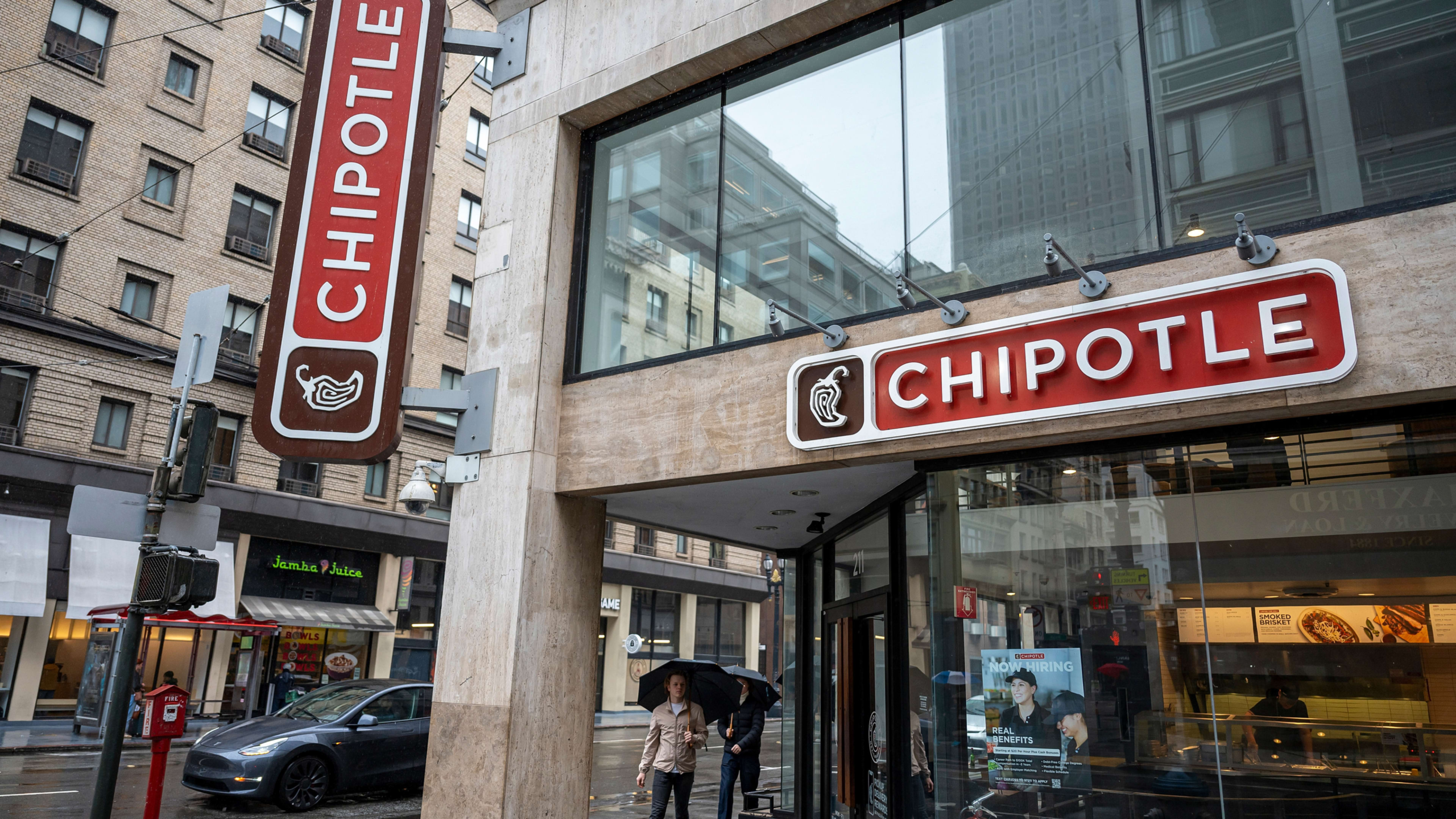
Chipotle’s stock plummets 50% this year… “Is America’s middle class cutting dining out?”
Premium brands’ downfall begins as quality ingredients and healthy meals lose appeal
“Dining out is now a luxury”… Chipotle signals the future of American consumption
Chipotle’s stock plunged 18% in a single day following disappointing earnings. This isn’t just a corporate issue—it’s a structural warning sign of middle-class consumption collapse, as 25-35 year-olds reclassify dining out as a “discretionary luxury,” signaling fundamental shifts in consumer behavior.
Chipotle Mexican Grill announced weaker-than-expected results, triggering an 18% single-day crash. The stock, which peaked at $60 earlier this year, has been cut nearly in half to around $31.
What caused the dramatic fall of America’s most popular premium fast-food brand?
Chipotle’s earnings decline isn’t about operational failure at a single company. It’s a warning signal of fractures in middle-class consumption. Particularly, as consumption trends deteriorate rapidly among the lower 40% of the middle class, this threatens revenue models not just in restaurants but across consumer goods and service sectors.
The problem is simple: consumers are spending less. And they’re doing it fast.
Chipotle’s Stock Cut in Half This Year… “Has America’s Middle Class Stopped Dining Out?”
Chipotle reported Q1 2025 revenue of $2.9 billion, up 6.4% year-over-year. Q2 came in at $3.0 billion, up 3.0%, and Q3 at $3.0 billion, up 7.5%. On the surface, it looks like growth. But dig into the numbers and the story changes.
Same-store sales—the performance of existing locations—came in at -0.4% in Q1, -4.0% in Q2, and +0.3% in Q3. Total revenue growth was barely maintained through new store openings. Customer visit frequency at existing stores is clearly declining. Q2 transaction volume plummeted 4.9%.
Chipotle revealed that “households earning under $100,000 annually account for about 40% of total sales, and this segment is reducing dining frequency.” The analysis points to the 25-35 age bracket cutting back on dining out first, driven by the resumption of student loan repayments, stagnant real wage growth, and employment uncertainty. Instead of dining out, they’re eating at home.
Q2 restaurant operating margin fell to 27.4%, down approximately 150 basis points year-over-year. With rising food, packaging, and labor costs while customers decline, margins are under pressure. Chipotle downgraded its annual guidance from “low single-digit growth” to “low single-digit decline.”

Source: TradingView
Quality Ingredients? Healthy Meals?… The Fall of Premium Brands Begins
Chipotle has built its reputation as a premium brand among fast-food chains. But as middle-class consumption contracts sharply, that premium positioning is becoming a liability.
In its earnings call, Chipotle noted “a more intense promotional environment and heightened competition emphasizing value and discounts.” Even a brand that built its premium image on “quality ingredients, healthy meals” now finds itself forced to emphasize “value for money.”
The challenge emerges from a pricing strategy dilemma amid rising supply costs.
Food prices, labor costs, and packaging expenses are climbing while consumer wallets are thinning. Raise prices and visit frequency drops; freeze prices and margins deteriorate. Chipotle stated it won’t pass all cost increases to customers—which means accepting margin compression. It’s choosing to sacrifice some profitability to preserve brand image.
Digital sales remain at about 35% of total food and beverage revenue. Chipotle presented store expansion, digital channel strengthening, and international expansion as growth strategies, but whether these can offset domestic consumption slowdown remains uncertain.
Past consumption slowdowns typically manifested as “price adjustments”—consumers choosing cheaper menu items or ordering less. But this is different. Declining transaction counts show consumers are adjusting “how often they spend” before “how much they spend.” They’re cutting dining out itself.
The concern is that consumption pattern changes among the 25-35 demographic—currently experiencing contraction—will likely determine the direction of the entire consumer market over the next 5-10 years. This cohort is digitally savvy but simultaneously price-sensitive, prioritizing practicality over experience. Student loan repayment burdens and uncertain employment conditions are suppressing their consumption patterns.

Chipotle’s (CMG) quarterly same-store sales growth plunged from 15.2% at the end of 2021 to -4% in Q2 2025, signaling a virtual halt in growth. The total cumulative change was -98%, with a CAGR of -64.9%.
Insight Bridge AI Perspective: “Dining Out is Now a Luxury”… Chipotle Warns About America’s Consumer Future
Chipotle’s earnings disappointment and management warnings aren’t trivial. They signal the collapse of consumption elasticity among America’s middle class, particularly its lower tiers. Economics tells us that when income drops, consumption falls proportionally. But in reality, consumers recognize the situation early and adjust spending frequency before income actually declines.
The 4.9% drop in transaction volume that Chipotle reported suggests a structural shift: America’s middle class is beginning to reclassify dining out from “routine consumption” to “discretionary luxury.”
If households earning under $100,000 annually are shifting their perception of dining out from “normal everyday activity” to “expenditure requiring careful consideration,” this could signal a critical turning point in the economic cycle. This spending behavior change is being led by younger generations facing student loan repayments and real wage stagnation. But their behavioral patterns will likely spread to older demographics with a time lag.
The dilemma Chipotle faces proves the limits of premium brands’ pricing power. The brand narrative of “quality ingredients, healthy meals” becomes powerless when consumers choose to reduce dining frequency itself. When wallets thin, price becomes the priority over brand value.
This is a critical signal about America’s economic future. When consumers start adjusting “how often they spend” rather than “how much they spend,” companies’ revenue structures themselves begin to shake.
Investors now need to verify not when consumption will recover, but whether it will recover at all. The American economy is deepening into a “K-shaped economy” with lower-tier consumption collapsing. Dining out is recognized as the most fundamental consumption area—a “spending baseline.”
If their dining frequency doesn’t recover, it means not just Chipotle but all consumption-dependent companies must re-examine their growth assumptions. It means investors should be cautious about companies with excessive consumption recovery expectations priced in, and those targeting lower-middle income and younger demographics as primary customers.
See more insightful news!
- “The Unexpected Reason ASML Invested In Mistral AI”
- “Oracle’s AI Revolution: The 36% Surge That Changed Everything”
- “China’s Global AI Ambition: The Shocking Strategy Behind Its New Action Plan”
- “Decoding the Fed’s Warning: How $1.1 Trillion in Margin Debt Threatens Your Portfolio”
- “Goldman Sachs Signals Gold Rally To $5,000 On Weak Dollar”
