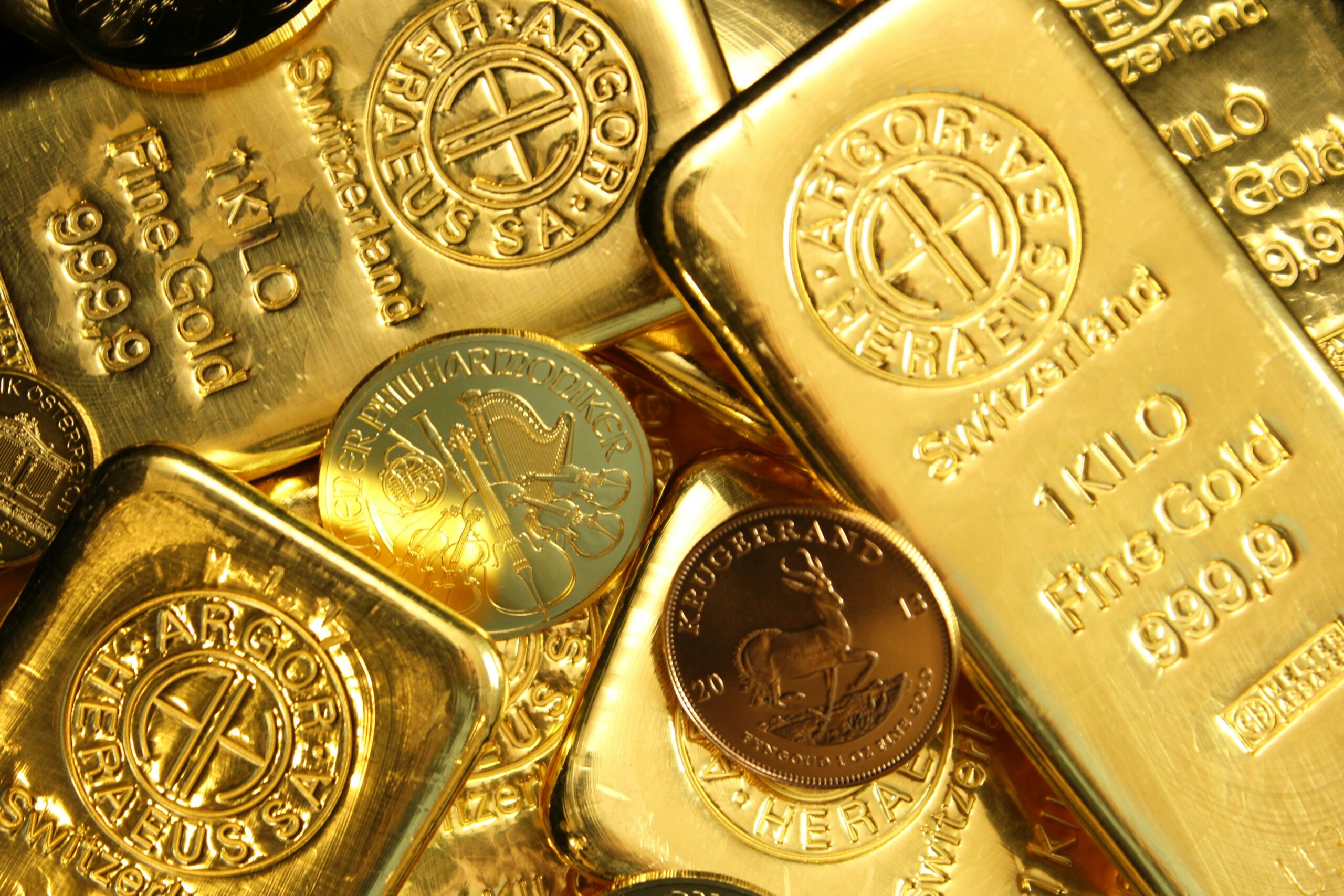
Dollar ‘trust’ collapse and cracks in the dollar era? Shocking signals behind gold’s breakthrough of $3,500.
Is the dollar doomsday theory becoming reality? The ‘age of gold’ predicted by investment banks.
Insight Bridge AI’s perspective: “Long live the GOLD!”…The era of King Gold has arrived.
Cracks in the Dollar Era? Shocking Signals Behind Gold’s $3,500 Breakthrough
Cracks in the dollar-centered financial order are accelerating. At the storm’s center lies US dollar-denominated debt. US 30-year Treasury yields have surged near 5%, while 10-year yields recorded levels in the 4.3% range, reaching their highest levels since the 2022 inflation peak. This signifies that faith in US government-issued bonds is gradually weakening. Meanwhile, during the same period, gold prices broke through $3,500 per ounce, surging over 35% this year. This is not merely market volatility but a signal that the fundamental foundation of the post-war financial order is shaking.
The backdrop to continued interest rate rises lies in the spreading perception that US Treasuries are no longer ‘risk-free assets.’ With annual fiscal deficits exceeding $2 trillion, Treasury issuance has surged, but traditional buyers like Japan and China are reducing their purchases. China, in particular, has long been dramatically reducing dollars and switching to gold. This has led to lackluster Treasury auctions, raising concerns about supply-demand imbalances.
A more serious problem is the change in market sentiment. US Treasuries, which traditionally attracted funds during every crisis, are now viewed with suspicion by investors. Concerns about government debt expansion and weakening fiscal discipline have become major drivers pulling bond yields higher. This means the traditional investment principle of ‘sell risky assets, buy safe assets’ no longer applies.
Currently, the biggest threat to the dollar is the issue of Federal Reserve independence. The Trump administration’s attempts at political intervention in the central bank are directly hitting dollar credibility. With President Trump publicly mentioning the possibility of dismissing Fed officials and some Republican lawmakers pushing legislation to strengthen congressional oversight of Fed rate decisions, concerns about central bank independence are spreading.
What the market truly fears is not the question of rate cuts or hikes. It’s the possibility that monetary policy could be influenced by political considerations rather than economic data. When Fed decisions become difficult to predict, questions arise about the stability of the entire dollar-based financial system. The market has chosen gold as an alternative to the dollar. In fact, the dollar index has lost a whopping 50% of its value against gold over the past five years.

In 2025, global central banks’ gold holdings in foreign reserves surpassed U.S. Treasuries for the first time since 1996, signaling a shift from dollar dominance toward gold amid de-dollarization. (Source: Bloomberg)
Is Dollar Doomsday Theory Becoming Reality? Investment Banks’ Predictions of the ‘Age of Gold’
Movements to reduce dollar dependence are also becoming visible on a global scale. BRICS countries, centered on China, India, and Russia, are reducing dollar usage in trade settlements, and the alternative chosen by these nations’ central banks is precisely gold purchases. This is manifesting as actual economic behavior beyond mere political declarations.
The reason gold is attracting attention is clear: it’s an asset that doesn’t depend on any government’s policies. Regardless of how the Fed adjusts interest rates, how much debt the US government accumulates, or what pressure politicians apply, gold’s intrinsic value remains unchanged. Because of these characteristics, demand for gold increases as uncertainty grows.
As gold’s relative value gains attention, major investment banks are also expecting continued gold price increases. Goldman Sachs raised its year-end 2025 target from the current $3,500 to $3,700 per ounce and analyzed that a rise to $4,000 is possible by mid-2026. Furthermore, they projected that if large-scale fund movements from bonds to gold begin in earnest, even $5,000 is possible.
JPMorgan, the largest US bank, predicted an average price of $3,675 for Q4 2025 and potential for rises up to $4,000 by Q2 2026. Another Wall Street investment bank, Bernstein, emphasized that gold should be analyzed focusing on monetary policy variables rather than traditional supply-demand models, predicting a breakthrough of $3,700 by 2026 is possible.
An important fact is that the core of these forecasts is not simple price prediction. The shift from dollars to gold is based on the recognition that investors’ asset preference structures themselves are changing. As fiat currencies based on trust lose credibility and fall, financial markets are seeking a structural transition with real assets as the axis.

U.S. and German 10-year government bonds have both entered negative nominal yields for the first time in decades or even centuries, reflecting a long-term decline in global interest rates, deflationary pressures, and the structural suppression of long-term bond yields by unconventional central bank policies. (Source: Deutsche Bank)
Insight Bridge AI’s Perspective: “Long live the GOLD!”…The Era of King Gold Has Arrived
Consequently, all these changes are demanding significant changes in investors’ investment strategies. The traditional portfolio construction principle was the 60/40 portfolio (60% stocks, 40% bonds), premised on stocks and bonds moving in different directions.
This strategy was possible because it was believed that when stocks fell, bonds would rise, and when bonds fell, stocks would rise, allowing for risk diversification. In other words, it was premised that risky assets were stocks and safe assets were bonds.
However, now both stocks and bonds are becoming unstable simultaneously. This is because both are assets that depend on government policies and central bank trust. In this environment, investors are modifying their strategies to increase the proportion of real assets like gold, commodities, and real estate. This is why approaches that increase gold asset allocation within portfolios to 10-20% levels and manage risk through dollar-cost averaging and rebalancing are gaining attention.
The dollar-centered financial order established after the collapse of the Bretton Woods system in 1971 is based on trust. The dollar initially relied on the prestige of being the ‘petro-dollar’ – the sole trading currency for oil – to build that trust. Subsequently, the dollar built trust through America’s overwhelming economic hegemony and transparent monetary policy. However, the most shocking change now is that the dollar’s ‘hierarchy of trust’ is being overturned.
In the past, government-issued bonds were the safest, followed by corporate bonds, stocks, and commodities in that order. The logic was that government was the most trustworthy entity, and therefore government-issued bonds were the safest assets. But now, as government bond credibility plummets, the real asset of gold is emerging as the highest-grade safe asset.
Even more interesting is the ‘central bank paradox.’ A self-reinforcing cyclical structure is forming where the more the Fed tries to stabilize markets through monetary policy, the greater the concerns about potential political intervention and price volatility become, amplifying market instability. The concern that Fed rate cuts are due to political pressure or will stimulate inflation represents an irony where the entity providing solutions is perceived as the source of the problem.
See more insightful news.
- “Palantir vs AMD Earnings Report… The Watershed Moment of AI Infrastructure Competition”
- “The Reality of 2025’s ‘K-Shaped Recovery’: The Worst Era of Polarization Since the Great Depression”
- “Figma’s IPO: A Game Changer for Design Tech”
- “Meta Mark Zuckerberg Proposes ‘Personal Superintelligence’ Strategy Building AI Vertical Integration Ecosystem”
