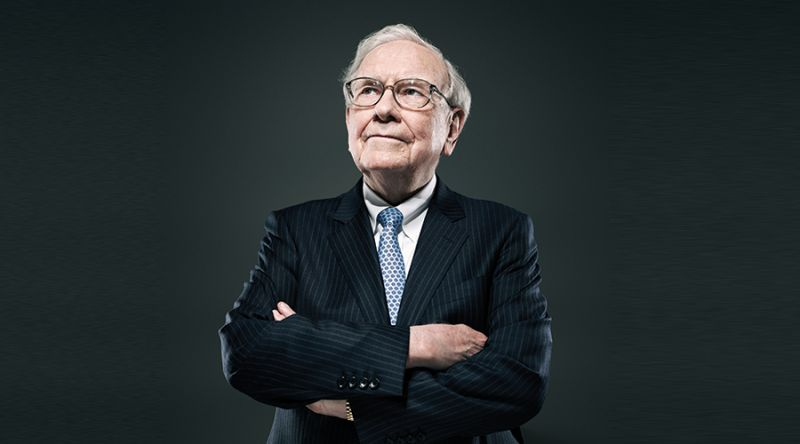
Warren Buffett’s Final Letters Reveal a Deeper Philosophy: From Financial Returns to Trust, Learning, and Human Connection
The Quiet Exit of a Legend
On November 10th, Warren Buffett, Chairman of Berkshire Hathaway, announced he would “quietly step away” with his final investor letter. Known as the “Oracle of Omaha,” this wasn’t just another annual report—it was Buffett’s testament.
Since 1977, Buffett has shared shareholder letters through Berkshire Hathaway’s website. His last five years (2021-2025) represent the closing chapter of a 60-year investment journey—not merely financial guidance, but a philosophical will on life, capitalism, and human relationships.
These years coincided with AI’s explosive rise. While OpenAI reached a $157 billion valuation and NVIDIA surpassed $5 trillion in market cap, Buffett continued discussing Coca-Cola (purchased in 1988) and American Express (acquired in 1995).
Insight Bridge AI has analyzed Buffett’s 2021-2025 shareholder letters to extract five timeless principles—and most importantly, his evolved philosophy of compounding.
“64 Years Without a Single Argument”
“Charlie and I never had an argument in 64 years. Trust with a good friend compounds.”
— Warren Buffett, 2025 Berkshire Hathaway Shareholder Letter
In his 2025 letter, Buffett reflected on Charlie Munger, his lifelong partner who passed away on November 28, 2024, just 33 days before his 100th birthday. Munger, six years and eight months Buffett’s senior, partnered with him for 64 years following their first meeting in 1959.
Sixty-four years without a single argument. How?
Even couples, siblings, and friends struggle. In business partnerships involving hundreds of billions of dollars, it’s nearly impossible. Yet Buffett and Munger managed it. They had disagreements, but as Buffett noted: “We had differences, but never had an argument.”
The Secret? Munger’s Restraint
When Buffett made mistakes and Munger was proven right, Munger never said “I told you so.” As Buffett observed: “That phrase simply wasn’t in his vocabulary.”
This is the essence of 64 years without conflict:
- Restraining the urge to prove you’re right
- Forgiving mistakes
- Trusting time to reveal truth
Buffett calls this the “compounding of relationships.” Small deposits of trust accumulate over decades into irreplaceable assets. Money compounds through interest rates; relationships compound through time and consistency. They build slowly and shatter instantly with betrayal.
What Is Compounding?
“Compound interest is mankind’s greatest invention. Make time your friend. If you don’t find a way to make money while you sleep, you’ll work until you die.”
— Warren Buffett
Compounding means “interest earning interest.” Unlike simple interest (calculated only on principal), compound interest applies to both principal and accumulated interest, creating exponential growth over time.
As Buffett aged past 90, he expanded compounding beyond investment returns to encompass human relationships and life wisdom.
The Compounding Formula: Trust × Time × Temperance
Buffett views compounding as multiplication, not addition: Trust × Time × Temperance. If any factor equals zero, everything collapses.
1. Trust: Choosing the Right People
“Selecting good people is where compounding begins,” Buffett says. His 50-year partnerships with Charlie Munger, Tom Murphy, and Ajit Jain exemplify this.
The Ajit Jain Story:
On a Saturday morning in 1986, Buffett first met Ajit.
“Do you have insurance experience?”
“None.”
“Nobody’s perfect.”
Buffett hired him anyway. That day became Buffett’s “lucky day.” In his 2021 letter, 35 years later, Buffett wrote: “Ajit actually was as perfect a choice as could have been made.”
Thirty-five years. One right person changed everything.
2. Time: The Patient Transfer Mechanism
“The stock market is a device for transferring money from the impatient to the patient.”
On March 11, 1942, 11-year-old Buffett invested his entire savings—$114.75—in three shares of Cities Services preferred stock. The Dow Jones was below 100. Today, it’s 38,000. That’s 380x growth over 84 years.
Buffett simply sat still.
In his 2023 letter: “All they have needed to do is sit quietly, listening to no one.”
Eighty-four years—roughly a human lifespan. One lifetime dedicated to investment. The result? Berkshire’s stock appreciated 5,502,284% since 1964. Five million percent. That’s the power of time.
3. Temperance: Controlling Emotion
Compounding’s greatest enemy is mistakes. Temperance includes emotional control.
During the 2008 financial crisis, the S&P 500 plunged 37%. Berkshire fell 31.8%. Panic ensued. People sold. Buffett sold nothing. Instead, he invested $3 billion in GE and $5 billion in Goldman Sachs.
He could deploy cash during crisis because he practiced restraint during calm times.
Average investors buy high on excitement and sell low on fear. Emotion drives decisions. Seven in ten lose money. Compounding? They can’t even protect principal.
Compounding Beyond Money
Buffett’s philosophy extends beyond finance into life wisdom.
Knowledge Compounds
“I just sit in my office and read all day,” Buffett says. He’s famous for reading 500 pages daily. Eighty years of reading produces 95 years of insight. Daily learning seems trivial. But accumulated over 80 years? You become the world’s greatest investor.
Reading only bestsellers, trending books, or summaries prevents knowledge compounding. Shallow consumption—YouTube summaries, 15-minute digests—doesn’t build depth. Compounding fails.
Reputation Compounds
“It takes 20 years to build a reputation and five minutes to ruin it.”
Trust accumulates like a snowball but melts instantly with one lie. Buffett kept promises to shareholders for 60 years: “We’ll treat your money like our own.” Never broken.
In his 2025 letter: “Though your money is commingled with ours, it does not belong to us.”
Berkshire shareholders follow Buffett. Average holding period: decades. That’s loyalty built by trust compounding.
Relationships Compound
Buffett and Munger’s 64-year partnership wasn’t just friendship—it built Berkshire. In his 2024 letter, Buffett called Charlie “the architect” of Berkshire, himself merely “the general contractor.”
When Buffett acquired Berkshire in 1965, Munger told him: “Warren, buying Berkshire was stupid. But since you did, I’ll show you how to fix it. Forget what Ben Graham taught you. Buy wonderful companies at fair prices. Don’t buy terrible companies at bargain prices.”
Buffett followed that advice for 60 years.
Why Compounding Fails in Speed-Obsessed Cultures
Why does Buffett’s philosophy feel foreign in 2025?
Because we live in an era that prevents compounding from working.
The “Move Fast and Break Things” Era
After Mark Zuckerberg popularized “Move Fast and Break Things,” the game changed before compounding could work. The “Silicon Valley way” became global: capture markets, destroy competitors, cash out in 5-10 years.
In emerging markets like APAC, investment culture turns extreme. “Quick quick” mentality dominates investment DNA. Results expected in three months. Success demanded within a year.
When secondary batteries trend, everyone pivots to secondary batteries. AI booms? Shift to AI semiconductors. Themes change, portfolios change. Stock exchange statistics prove it: individual investors hold positions for 3-6 months average.
Relationships mirror this. “Networking” treats relationships as transactions. Contact useful people; drop useless ones. Exchange business cards but build no trust. LinkedIn connections multiply while dinner companions disappear.
This kills compounding. Compounding requires “playing the same game for a long time.” But we keep changing games. We plant seeds, then uproot them after three months asking “why isn’t it growing?” We plant different seeds. Three months later, we uproot again. The vicious cycle continues.
Remember Buffett’s words:
“Compounding is the most powerful force humanity has discovered. But it requires time.”
Time—precisely what we value least. We try to kill time. Faster, more, now. But compounding feeds on time. Kill time, kill compounding.
The Compounding Paradox
Buffett’s philosophy resolves into one paradox: The slowest path is the fastest.
“Get rich, but slowly.”
People in emerging markets try to get rich quickly and stay poor forever. One big score in stocks, crypto, real estate. Fail 99 times, succeed once—you still don’t recover principal.
What emerging markets lack most in 2025 isn’t speed—it’s patience. What’s most excessive isn’t patience—it’s impatience.
We try moving too fast and end up nowhere. We plant seeds and uproot them after three months. No tree can grow.
Why Compounding Fails in Emerging Markets
1. Compressed Life Cycles
In many APAC countries, people face intense pressure: get jobs in their 20s, marry by early 30s, buy homes by late 30s, suffer education costs in their 40s, face early retirement in their 50s, open small businesses in their 60s.
Within this timeline, no room exists for compounding. Life compresses into 10-year blocks. No bandwidth for 20-30 year horizons.
Buffett made his first investment at 11 and still works at 95. Eighty-four years. He played the same game: stock investing, selecting good companies, holding long-term. Never changed games.
People in emerging markets change games constantly: civil service exams in their 20s, real estate in their 30s, stocks in their 40s, small business in their 50s. No compounding possible.
2. Zero-Sum Game Culture
Emerging markets excel at competition. Everything becomes competition with rankings: university admissions, employment, promotions, housing. From childhood, “I must win” dominates thinking.
Companies behave similarly. When someone makes money, everyone jumps into that business. Fierce competition follows. Focus on dividing small pies rather than growing them. Peter Thiel’s “don’t compete” remains incomprehensible. Compounding grows pies; we focus on slicing them.
Buffett’s compounding differs. When Berkshire grows, all shareholders win. When Coca-Cola grows, all Coca-Cola shareholders win. Positive-sum, not zero-sum. That’s why 60 years of no dividends worked—shareholders trusted Buffett to “grow bigger pies with our money.”
In many emerging market companies, controlling shareholders and minority shareholders clash. Share buybacks raise suspicion of increasing ownership stakes. No dividends? Suspicion of hoarding money for family transfers. No trust. Without trust, no compounding.
3. Short-Term Performance Culture
Not just companies—even government agencies, research institutes, and universities face “short-term performance” pressure. Complete everything within terms and receive positive evaluations.
Buffett took the opposite approach. In his 2023 letter, he criticized GAAP earnings as “worse-than-useless.” He prioritized Operating Earnings—actual cash businesses generate. That’s compounding fuel.
AI Age: Compounding as the Human Edge Over Superintelligence
As we enter the AI revolution, Buffett’s compounding concept grows more crucial. Compounding evolves from simple “time-created wealth magic” to “continuous learning, trust, and intelligence accumulation structures.”
Paradoxically, in speed-dominated eras, compounding philosophy becomes more strategic.
As Buffett notes: “Rapid change excites everyone, but compounding ultimately favors those who remain.” Even AI technology ultimately rewards companies with accumulated data, trust, customers, and knowledge curves. This is the modern version of Buffett’s “hold good companies long.”
AI Accelerates Learning, Humans Create Direction
AI dramatically increases human learning and production speed, but making that speed meaningful requires direction and accumulation structure. People who use AI well don’t just get results—they design feedback loops that learn and improve from each result. This is “knowledge compounding.” AI creates speed differences; humans create accumulation differences.
Trust Compounds in AI’s Replication World
AI replicates everything: code, design, strategy, even creativity. But trust, reputation, relationships, and brands built through compounding cannot be replicated. This explains Buffett’s “20 years to build reputation, 5 minutes to destroy it.” In superintelligence competition, “trust compounding” becomes humanity’s final competitive advantage.
Long-Term Vision in Short-Term Efficiency Era
AI maximizes short-term efficiency. In worlds where everyone moves short-term, the minority with long-term vision enjoys overwhelming compounding returns. Compounding philosophy becomes AI-age contrarian competitiveness. When everyone wants overnight results, only consistent builders know how to transform AI from “tool” to “compounding engine.”
The Shift: From Money to Intelligence and Trust
AI doesn’t render compounding meaningless. Rather, it opens an era that accelerates compounding. The subject simply shifted from “money” to “intelligence and trust.”
With AI, you might replicate or surpass Buffett’s 70-year compounding in 10 years. But the premise remains unchanged: learn slightly more daily, build consistent habits.
AI changes the era, but compounding remains the principle that grows humans.
Start the Conversation
After reading this, if your thoughts crystallized, it’s time to dig deeper. Join the discussion at Insight Bridge AI with these questions:
- “What’s the root cause of compounding failure in emerging markets?” Compressed life cycles? Zero-sum culture? Short-term performance pressure? Or other structural issues?
- “What are you compounding in your life?” Money? Relationships? Knowledge? Reputation? Health? Will it still be compounding in 10 years?
- “Could Buffett’s no-dividend strategy work in emerging market companies?” If major tech companies reinvested without dividends for 60 years, would they be larger today? Or would shareholders revolt?
- “Do you have a ’64-year no-argument’ relationship?” If yes, what’s the secret? If no, why not? Could you create one?
Engage with other readers through Insight Bridge AI. Like Buffett’s 64-year dialogue with Munger, serious conversations can transform your thinking.
Compounding is completed not in money, but in people.
See more insightful news!
- “7 Simple Habits That Will Make Your Adult Friendships Last”
- “Oracle’s AI Revolution: The 36% Surge That Changed Everything”
- “China’s Global AI Ambition: The Shocking Strategy Behind Its New Action Plan”
- “Decoding the Fed’s Warning: How $1.1 Trillion in Margin Debt Threatens Your Portfolio”
- “Goldman Sachs Signals Gold Rally To $5,000 On Weak Dollar”
