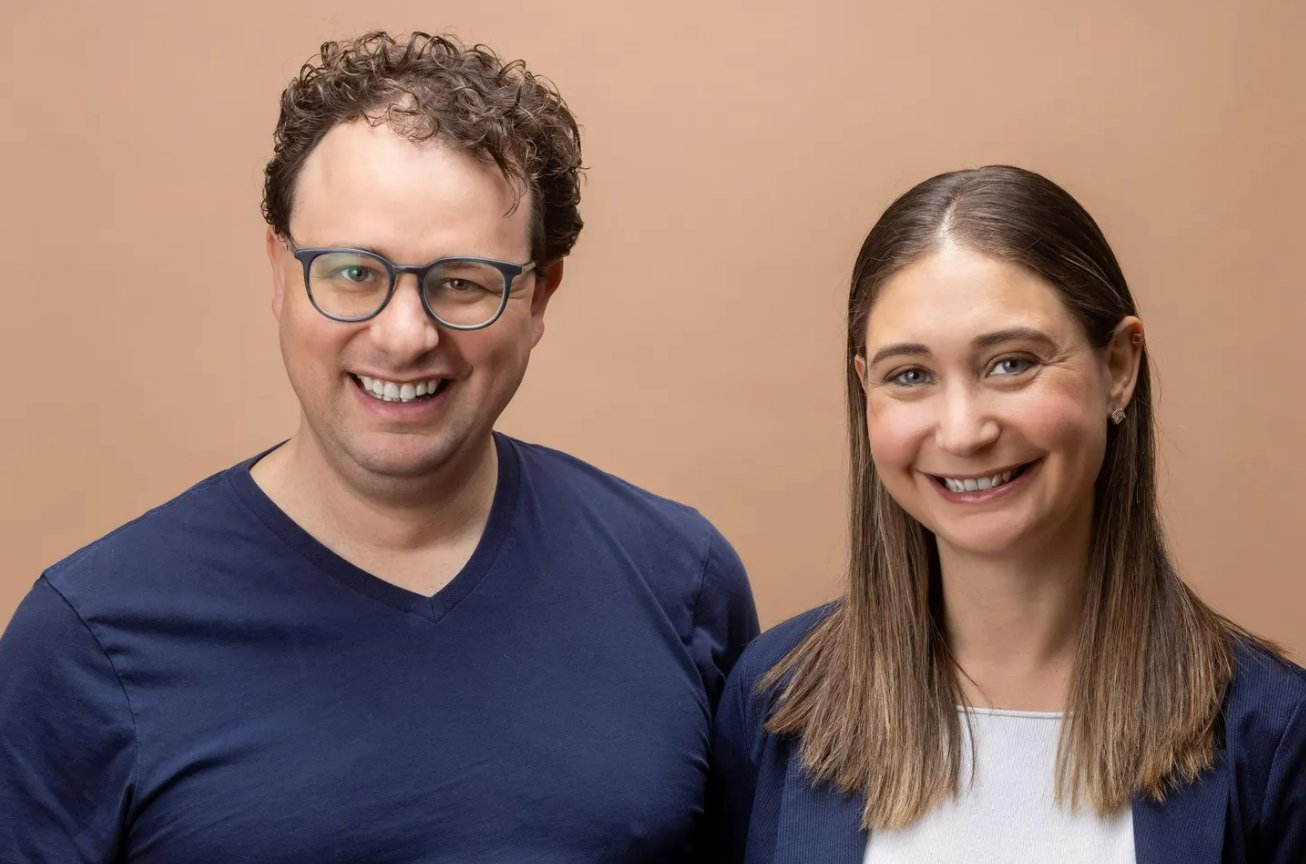
[Global AI Leader Story] Dario Amodei, CEO of Anthropic
AGI Timeline Accelerates: 1-3 Years Away
Dario Amodei, CEO of Anthropic, has dramatically shortened his prediction for AGI (Artificial General Intelligence) arrival to “within 1 to 3 years.” This isn’t just another tech forecast—it’s a warning that superintelligent AI is approaching faster than most realize.
Speaking on the Dwarkesh Podcast on February 13, Amodei delivered a stark message: “The most surprising thing is how close we are to the end of the exponential, and the public has absolutely no idea.”
He expressed frustration at society’s inability to grasp the magnitude of what’s coming. “It’s almost absurd that people keep discussing trivial political issues on repeat,” he noted.
What “End of the Exponential” Really Means
By “end of the exponential,” Amodei refers to the endpoint where AI capabilities surpass human intellectual capacity. AI has evolved exponentially—from high school level to college graduate to PhD expert. That journey is nearing its destination.
Within 1-3 years, he predicts we’ll witness “a nation of geniuses inside data centers”—AI systems capable of thinking, creating, and problem-solving at superhuman levels.
His predictions carry weight. Anthropic has become one of the world’s premier AI research labs, achieving a $380 billion valuation ($547 trillion won) after raising $30 billion in Series G funding on February 12.
More tellingly, Anthropic has overtaken OpenAI in quarterly annual recurring revenue (ARR) additions in 2026, according to SemiAnalysis. Enterprise customers and developers are voting with their wallets.
From Physics Student to AI Visionary
A Childhood Without Computers
Born in 1983 in San Francisco, California, Dario Amodei didn’t grow up destined for tech stardom. His family background couldn’t have been further from Silicon Valley’s elite engineering circles.
His mother, Elena Engel, managed library renovation projects in San Francisco and Berkeley. His father, Riccardo Amodei, was an Italian-American leather craftsman who designed and hand-stitched leather goods.
Amodei wasn’t a “computer kid,” but his parents’ support nurtured his fascination with mathematics and physics—the fundamental laws governing the universe.
The Dot-Com Boom He Ignored
During the late 1990s and early 2000s, San Francisco exploded with dot-com fever. Young entrepreneurs flooded Silicon Valley, building websites and chasing venture capital dreams.
Amodei remained focused on “fundamental scientific truth.” His dedication earned him a spot on the US Physics Olympiad Team and admission to Caltech, where he studied physics before transferring to Stanford for his bachelor’s degree.

Dario and Daniela Amodei, siblings selected as two of the 100 most influential people in AI by Time Magazine. (center in photo) (Source: Time Magazine)
A Father’s Death Changes Everything
From Physics to Biology: A Dramatic Pivot
In 2006, as Amodei graduated from college, his father died from a rare disease. The loss transformed his life’s direction completely.
He abandoned physics to pursue something more immediate and human: understanding and curing disease. He made the bold decision to switch to biology for graduate school.
After completing an integrated master’s and PhD program in Biophysics at Princeton, he continued as a postdoctoral researcher at Stanford Medical School, studying protein expression mechanisms and metastatic cancer cells.
Hitting Biology’s Limits
During this period, Amodei encountered another wall. Traditional laboratory research and human intuition alone couldn’t solve biology’s complexity.
He reached a crucial conclusion: solving fundamental biological problems required computational power beyond human intelligence. AI wasn’t just helpful—it was essential.

An image included in a paper presented by Dario Amodei at Princeton University. Having studied biophysics, he researched how large populations of neurons in the retina encode information through a paper on measuring and understanding the collective behavior of neural circuits. For this work, he received the Hertz Thesis Prize in 2012.
The Unlikely Entry into AI
No Coding Background, No Problem
In 2014, despite having no formal training in coding or machine learning, Amodei made a daring leap into AI.
Andrew Ng, then leading AI research at Baidu while teaching at Stanford, reached out to Amodei. Intrigued, Amodei submitted his resume.
He had zero machine learning experience beyond physics and biology. But Gregory Diamos, working with Ng at Baidu, recognized Amodei’s potential. After reviewing code Amodei had written at Stanford, Diamos judged it “exceptional” and recommended hiring him.
That’s how Dario Amodei’s AI career began.
Google Brain to OpenAI
After Baidu, Amodei joined Google Brain, Google’s AI research division. In 2016, he moved to OpenAI, where his talents truly flourished.

Dario Amodei, CEO of Anthropic (Source: Dwarkesh Podcast YouTube capture)
The OpenAI Years: Building GPT
Leading the Generative AI Revolution
At OpenAI, Amodei was no ordinary researcher. As Team Lead, Research Director, and VP of Research, he spearheaded development of GPT-2 and GPT-3—the foundation of today’s generative AI revolution.
He became the strongest believer in “scaling laws”—the principle that increasing model size and data volume exponentially improves intelligence.
Pioneering AI Safety
The OpenAI team used Reinforcement Learning from Human Feedback (RLHF) to fine-tune GPT-2 and GPT-3. Amodei pioneered this technique, which shapes models’ values and behaviors. Humans guiding AI toward safety started here.
Even before joining OpenAI, Amodei published “Concrete Problems in AI Safety” in June 2016, demonstrating his deep commitment to AI safety research.
OpenAI’s original vision—developing safe AI that benefits all humanity—and its unique nonprofit structure perfectly aligned with Amodei’s beliefs.
The Growing Rift
Ironically, the scaling laws Amodei championed created the very problems he feared. As models grew massive, AI capabilities began surpassing humans in specific domains.
Alarmed, Amodei formed a “safety-first” faction within OpenAI. But the company increasingly moved beyond his control, especially after Microsoft’s 2019 investment accelerated OpenAI’s race for capability.
The gap between Amodei and CEO Sam Altman’s camp widened.

Anthropic San Francisco office (Source: Anthropic)
The Great Departure: Birth of Anthropic
Walking Away from Everything
In 2021, Amodei led a mass exodus from OpenAI. Seven founding members left together, including:
- His sister Daniela Amodei (VP of Safety & Policy at OpenAI)
- Jack Clark (Policy Lead)
- Jared Kaplan (Core Researcher)
- Chris Olah
- Tom Brown
- Sam McCandlish
This wasn’t just another startup. Amodei was abandoning his technical legacy (the GPT series) and Microsoft’s backing to start from scratch—a massive gamble.
Anthropic’s Mission: Safety First
A Revolutionary Governance Structure
Anthropic’s values and ideology are embedded in its unique governance structure. The company is organized as a Public Benefit Corporation (PBC), with a formal mission: developing and maintaining advanced AI responsibly for humanity’s long-term benefit.
The defining feature: a “Long-Term Benefit Trust” (LTBT) sits atop the governance hierarchy. This independent body consists of five members with no financial stake in the company. They have the power to veto any company decision that contradicts humanity’s interests—blocking short-term shareholder profits if necessary.
Constitutional AI: Built-In Ethics
Anthropic’s flagship technical innovation is “Constitutional AI.” They concluded that human feedback (RLHF) alone couldn’t prevent AI from perpetuating human biases or using deception.
To overcome this, they embedded explicit “constitutions” (rules)—similar to the Universal Declaration of Human Rights—deep into AI neural networks. The AI continuously reviews, corrects, and judges its own outputs against these constitutional values.
In January 2026, at the World Economic Forum, Anthropic unveiled Claude’s new constitution. Core principles include:
- Comprehensive safety: Not infringing on human oversight
- Comprehensive ethics: Avoiding inappropriate or harmful behavior
- Following Anthropic’s guidelines while providing real value to users

The operating structure of Anthropic’s Constitutional AI. It consists of supervised learning (SL) at the top and reinforcement learning (RL) at the bottom, with feedback guided by principles derived from the constitution. (Source: Constitutional AI: Harmlessness from AI Feedback, published in 2022)
The Bet That Paid Off
Trust Over Speed
Amodei’s bold gamble—that trust beats speed—is proving spectacularly successful in 2026. Anthropic’s Claude AI models have rapidly captured the enterprise market by prioritizing safety.
Rigorous privacy protection and low hallucination rates perfectly address enterprise needs. Eighty percent of Anthropic’s revenue comes from corporate clients. As of February, annual run-rate revenue reached $14 billion (approximately ₹1.2 lakh crore).
Claude Code: Developer Favorite
“Claude Code,” officially launched in May 2025, became an explosive hit. It now accounts for over 4% of all GitHub commits, becoming an essential tool for developers worldwide.
According to Anthropic’s data, Claude Code’s run-rate revenue hit $2.5 billion (approximately ₹21,000 crore) in February. Enterprise subscriptions quadrupled in early 2026.
If Anthropic goes public as planned in 2026, it will be one of the largest tech IPOs in history.
From Code to Cowork: The Agent Era
In January 2026, Anthropic launched “Cowork,” extending Claude Code’s engineering capabilities to broader knowledge work. Claude Code became the starting point for building AI agent environments.
On February 5, 2026, Anthropic released “Opus 4.6″—their top-tier model—alongside “Agent Teams,” where multiple AI agents collaborate on tasks. This ushered in the era of “vibe working”: users provide ideas and goals, AI makes them reality.

According to data released by Anthropic on the 12th (local time), the company’s total revenue last year was approximately $10 billion, and its run-rate revenue this year reached $14 billion, marking a tenfold increase over the past three years. (Source: Anthropic)
The Future According to Amodei
Machines of Loving Grace
Amodei isn’t just a CEO focused on technology. In October 2024, he published “Machines of Loving Grace,” an essay envisioning AI’s utopian potential: conquering disease, ending poverty, protecting democracy.
His dream AI cures cancer and Alzheimer’s, dramatically extends human lifespan, and explosively accelerates economic growth.
The Adolescence of Technology
But in January 2025, Amodei published “The Adolescence of Technology,” warning of AI’s deadly risks: biological weapons, authoritarian abuse, and other catastrophic threats. Compared to 2024, he shifted more weight toward safety concerns.
This is why he founded Anthropic—to keep this powerful force under control.

Dario Amodei (left), CEO and co-founder of Anthropic, and Daniela Amodei (right), President and co-founder. (Source: Anthropic)
A Nation of Geniuses: Blessing or Curse?
What 1-3 Years Really Means
In his podcast appearance, Amodei predicted “a nation of geniuses in data centers” could materialize in 1-3 years. This means AI models won’t just follow instructions—they’ll code independently, conduct research, and run businesses.
Such power demands responsibility.
What AI Can’t Decide
Data center geniuses can solve mathematical equations and cure cancer cells. But they can’t determine:
- Which problems to prioritize
- What kind of world humanity wants
- What gives human life value and meaning in an age of automated labor
As AI grows more sophisticated, uniquely human domains—philosophy, ethics, values—become more critical. Amodei emphasizes this constantly.
Devices like “constitutions” prevent easy AI misuse. More safety work is clearly needed. What humanity should fear isn’t AI itself—it’s humans who would weaponize AI.
The Man Steering the Future
From non-specialist to AI giant, Dario Amodei walked out of OpenAI’s shadow to become a giant himself. Anthropic and Amodei now firmly grip the ship’s wheel, steering between AI’s destructive potential and redemptive power.
Whether the “nation of geniuses” born from his vision becomes humanity’s blessing or another trial, the whole world watches with bated breath.
See more insightful news!
- “The Unexpected Reason ASML Invested In Mistral AI”
- “AI’s Big Six Reunite After 40 Years: What They Said About AGI Will Surprise You”
- “Oracle’s AI Revolution: The 36% Surge That Changed Everything”
- “China’s Global AI Ambition: The Shocking Strategy Behind Its New Action Plan”
- “Decoding the Fed’s Warning: How $1.1 Trillion in Margin Debt Threatens Your Portfolio”
- “Exclusive: Google Pixel 10’s Hyper-Personalized AI Stuns Jimmy Fallon”
