President Donald Trump’s decision to impose a steep 39% “reciprocal tariff” on Swiss imports reportedly stemmed from his judgment. He believed that the Swiss president showed no sincerity in resolving trade imbalances during their phone conversation.
According to Bloomberg, the two presidents held a phone call on July 31st at 8 PM local Swiss time (2 PM Eastern US time). This was just about 10 hours before Trump’s self-imposed deadline for a trade agreement. While the initially planned tariff was 31%, Trump announced after the call. He stated that he would apply 39% reciprocal tariffs starting August 7th.
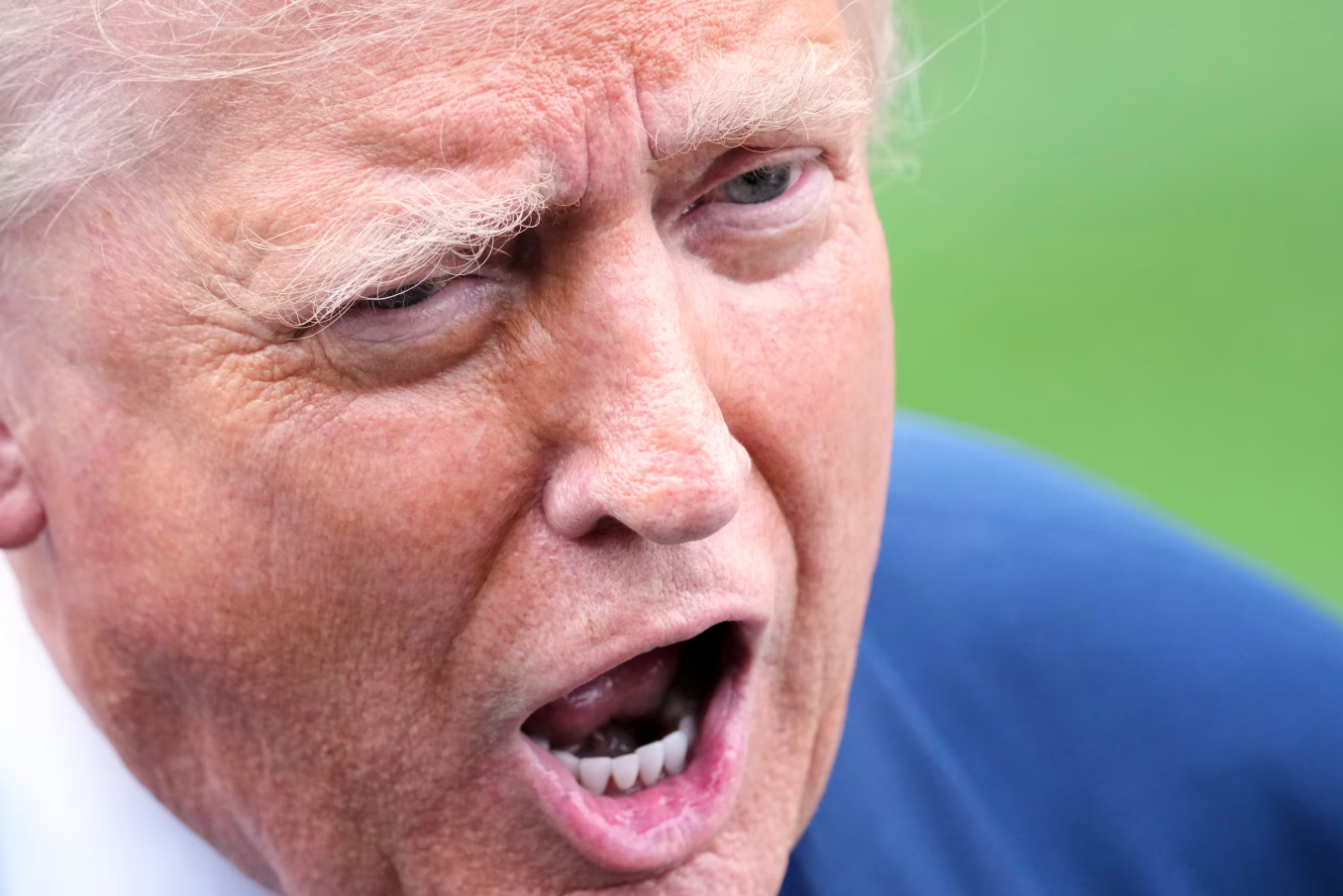
According to Swiss government officials, Trump focused intensively on Switzerland’s $40 billion annual trade surplus with the US during the call. He claimed it was tantamount to Switzerland stealing money from America. However, when Swiss President Keller-Sutter failed to offer any meaningful proposals, Trump became furious. He immediately decided to increase the tariffs.
Switzerland was completely unprepared for this outcome. Swiss working-level officials and their US counterparts—Treasury Secretary Scott Bessent and US Trade Representative Jamieson Greer—had already prepared a draft trade agreement in early July. The Swiss government approved it on July 4th. Therefore, they misjudged Trump’s final approval as merely a formality. However, Bloomberg reported that “Switzerland learned through the last-minute call with Trump that no agreement is final without the US president’s direct approval.”
In a Newsmax interview on August 1st, Trump did not directly mention the Swiss president, unlike his comments about Powell. However, in a Truth Social post, he claimed, “She (Kugler) resigned because she knew he (Powell) was doing the wrong thing with interest rate decisions. He should resign too,” continuing the emotions from the phone call.
President Keller-Sutter rebutted Trump’s claims the next day, August 1st, calling them “absurd thinking.” Regarding the possibility of visiting Washington DC before the tariff implementation date of August 7th for negotiations, she said she “wouldn’t rule out the possibility” but added. She noted that “both sides’ positions need to be bridged.”
While the White House did not issue an official comment on the report, an anonymous official stated that “the president took direct action because Switzerland failed to make meaningful concessions on trade barriers.” They added, “wealthy countries shouldn’t expect agreements without concessions on major items.”
This is expected to directly impact Switzerland’s pharmaceutical industry, which accounts for about 60% of Swiss exports. Particularly as the Trump administration strongly demands drug price reductions, Swiss pharmaceutical companies face a double burden. There are tariffs and policy pressure. While the original draft agreement included tariff exemptions for Swiss pharmaceutical exports to the US, Trade Representative Jamieson Greer denied this in a Bloomberg TV interview. He stated, “We will now impose tariffs on pharmaceuticals as well and encourage domestic US production.”
He added, “Not every document exchange constitutes an agreement. Nothing is finalized until there’s an agreement.”
Switzerland’s luxury consumer goods industry also faces inevitable damage. According to the Associated Press, the Federation of the Swiss Watch Industry stated they were “very disappointed and shocked by the US decision to impose 39% tariffs.” Despite Trump, his family, and associates having worn Swiss luxury watches, high-end watch retailers expect US retail prices to increase. They anticipate an increase of approximately 12-14% due to this measure.
Luxury brand events, including watch exhibitions featuring Swiss watch brand IWC displays and other luxury brands, will also be unable to escape the fallout from this decision.

Source: Gemini 2.5
Analysis: The Erosion of Diplomatic Norms in Trade Relations
This incident represents a troubling departure from established diplomatic protocols in international trade negotiations. The abrupt escalation from a 31% to 39% tariff rate was based solely on a single phone conversation. This reveals a concerning trend toward personalized, emotion-driven trade policy that undermines decades of institutionalized multilateral frameworks.
From a trade economics perspective, targeting Switzerland—a nation with whom the US maintains relatively stable and complementary trade relations—signals a fundamental shift. This shift affects how trade imbalances are conceptualized. The $40 billion surplus, while substantial in absolute terms, represents a natural outcome of comparative advantage theory. Swiss specialization in high-value pharmaceuticals and luxury goods reflects legitimate economic efficiency rather than predatory practices.
More significantly, this episode exposes the fragility of contemporary trade diplomacy when institutional safeguards are bypassed in favor of direct presidential intervention. The Swiss assumption that technical-level agreements would suffice demonstrates how traditional diplomatic assumptions may no longer apply. In this era of highly personalized international relations, this precedent could fundamentally alter how smaller nations approach trade negotiations with major powers. There may be a requirement for direct head-of-state engagement even for routine commercial arrangements. This development would strain diplomatic resources and introduce unprecedented volatility into global trade relations.
See more insightful news!
